
PARENT CARE GUIDE
Palatal Expander Instructions and Care
Your child has a new palatal expander, and you have a small metal key and a turning schedule sitting on the kitchen counter.
If that feels like a lot of responsibility, that is a normal reaction. The good news is that turning an expander takes about fifteen seconds once you have done it twice, and the appliance does most of its work on its own.
This page walks through the turning technique step by step, what is normal in the first week, what your child can eat, and when to call us. Bookmark it on your phone so it is there at 8 pm when you cannot remember which direction the key goes.

15 sec
A turn takes, once you know it
2 to 6 wks
Typical active turning phase
~4 mos
Total time, turning plus holding
Why Is My Child Being Treated With an Expander?
The upper jaw is normally slightly wider than the lower jaw. That small difference does two useful things. It lets the upper teeth guide the cheek away from the biting surfaces so your child does not bite their cheek, and it allows the teeth to work properly during chewing and speaking.
When the top jaw is narrower than the lower jaw, a crossbite occurs. The bite lands in the wrong place, and the jaw often shifts to one side to find a comfortable position. Over time, that shift can affect how the jaw grows.
A palatal expander corrects the width problem at the source. Instead of tipping teeth outward, it gently separates the two halves of the upper jaw at the midpalatal suture, the seam that runs down the roof of the mouth. New bone fills in the space. The result is a wider foundation, not just wider teeth.
Dr. Jen also uses expanders to create room for crowded permanent teeth, to help impacted canines find a path down, and to open the nasal airway in children who chronically breathe through the mouth.
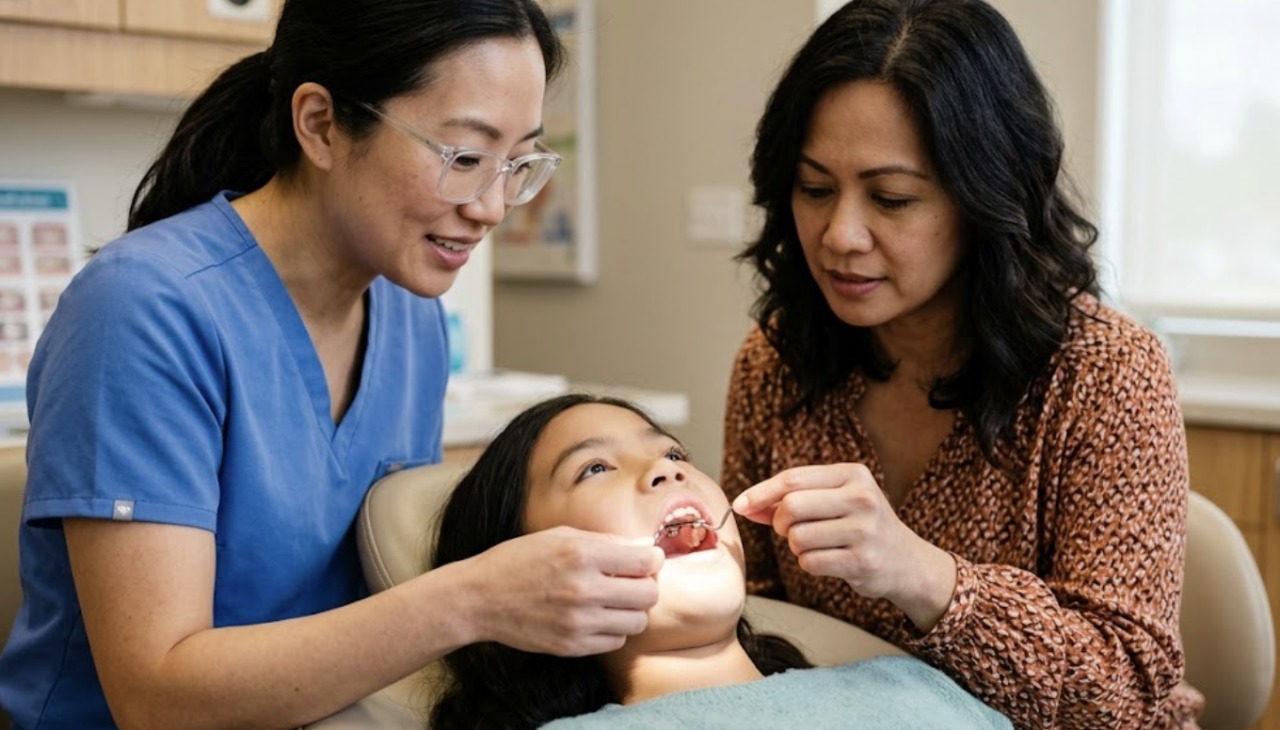
TIMING MATTERS
Can We Do the Expander Later, When My Child Is a Teenager?
Orthopedic jaw change can only be accomplished in younger, growing patients.
The midpalatal suture is still flexible in childhood. As a patient moves through the teen years, that seam fuses, and gentle expansion stops working. At that point, widening the upper jaw usually requires a surgically assisted procedure or a bone-anchored appliance.
That is why timing matters so much with expanders. The window is real, and it closes.
How to Turn the Palatal Expander
Do the turns at the same time each day so they become part of a routine. Bedtime works well for most families because any pressure fades while your child sleeps.
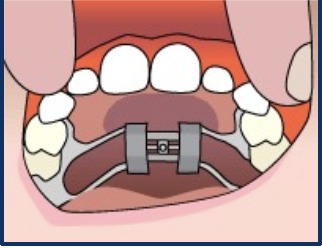
STEP 1
In a well-lit area, tip the patient's head back. Sitting on the floor with your child's head in your lap gives you the best view. A phone flashlight helps.
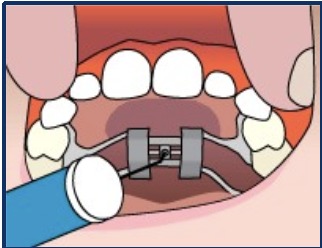
STEP 2
Place the key in the hole until it is firmly in place. There is a bend in the key that prevents you from inserting the key too far, so you will not poke the patient.
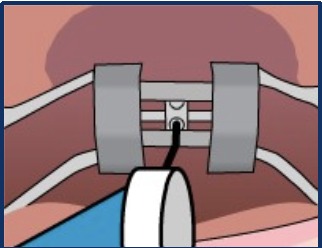
STEP 3
Push the key toward the back of the mouth. You will notice the wheel in the expander rotate, and a new hole appear. The rotation stops when the key meets the back of the expander. Go all the way until it stops. A partial turn does not count.
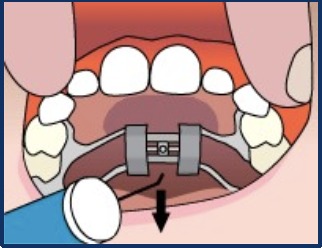
STEP 4
Push back and down toward the tongue to remove the key. The next hole for insertion of the key should now be visible.
That last part is the step most parents get wrong. If you pull the key straight out, you can accidentally reverse the turn you just made. Back and down, toward the tongue, every time. Seeing the next hole confirms the turn. If no new hole is visible, the turn did not complete.
Turning Schedule
Please do 1 turn every days. Continue your turns until you reach a total of turns or until your next appointment, whichever comes first.
Swipe sideways to see the full week.
Mark the box each time you turn. A checked calendar removes all the guesswork about whether you already did today.
Set a recurring phone alarm for the same time each evening. Parents who do this almost never miss a turn.
Tap a box to mark a completed turn. On mobile, swipe sideways to see the full week.
What to Expect
Often the expander is turned every night or every other night. Please follow the instructions given to you by Dr. Jen, since the schedule is set for your child's specific case.
If you forget a turn, do not give extra turns to catch up. Just continue to follow the prescribed schedule. Doubling up puts more force on the suture than the tissue can handle comfortably.
Stop turning the appliance after you have completed the number of turns recommended by Dr. Jen.
Pressure is normal
Your child may feel pressure that feels like a sinus headache after turning the appliance. This is normal and a good sign. It usually lasts a few minutes and then fades.
A gap is a good sign
A space between the front teeth is also a good sign. Watch for a gap opening up between the two upper front teeth. That gap is proof the suture is separating, and the appliance is doing exactly what it was designed to do.
SETTLING IN
The First Few Days
The first two or three days ask the most of your child. Here is what is typical:
Extra saliva
The tongue reads the appliance as something new and the salivary glands respond. This settles within a couple of days.
A temporary lisp
Words with s and t sounds get slushy. Reading aloud for ten minutes a day speeds up the adjustment noticeably.
Trouble swallowing normally
The tongue has less room to press against the palate. It sorts itself out quickly.
Food catching under the appliance
This continues for the whole treatment, which is why the rinsing habit below matters.
If your child is uncomfortable after a turn, an over-the-counter children's pain reliever taken before the turn rather than after tends to work better. Confirm dosing with your pediatrician.

DAILY CARE
Cleaning and Daily Care
Food gets trapped around an expander more than around braces. The appliance sits directly against the palate, and the space underneath is hard to reach with a toothbrush.
Make sure to brush all around the appliance and swish with water after eating to loosen any food stuck around it.
BUILD THE ROUTINE LIKE THIS
01
Brush teeth twice a day
Angling the brush to reach where the metal bands meet the molars.
02
Swish after eating
Swish forcefully with water after every meal and snack. Push the water up against the roof of the mouth, not just around the teeth.
03
Water flosser daily
Use a water flosser once a day if you have one. Aim it up under the appliance. Nothing else clears that space as well.
04
Fluoride rinse at night
Rinse with a fluoride mouthwash at night to protect the enamel around the bands.
Bad breath is the usual first sign that food is sitting under the appliance. Step up the rinsing before you worry about anything else.

EATING WITH AN EXPANDER
Foods to Avoid
Avoid very sticky foods such as gum, caramel, and taffy, which may loosen the expander.
Add these to the avoid list as well:
- Hard candy, ice, and popcorn kernels, which can bend or unseat the appliance
- Nuts and hard pretzels
- Chewy candy of any kind
- Whole raw carrots and apples, unless they are cut into small pieces
- Sugary drinks, which pool under the appliance and sit against the enamel
Softer meals help during the first week. Think pasta, eggs, yogurt, smoothies, soups, and shredded chicken. Most kids are back to normal eating within a few days.
When to Call Our Office
If the expander feels loose, please call our office and stop turning the appliance. Turning a loose expander can cause a sore spot or further damage the appliance. This is not an emergency, but it does need an appointment.
Call us at (310) 543-2711 if you notice any of the following:
- The expander shifts, wiggles, or clicks
- You cannot find the next hole after a turn
- The key will not go in, or a turn feels blocked
- Your child has a sore spot or ulcer that lasts more than a few days
- Pain that does not fade within an hour of turning
- The appliance falls out completely; in which case, keep it and bring it with you
If the key is dropped or swallowed, stay calm. Call us, and we will replace it. Attaching a length of dental floss to the key and looping it around your finger is a simple way to prevent this.
How Long Does My Child Need to Wear the Expander?
The expander will be turned until the upper arch becomes wider than the lower arch. Then the expander screw will be stabilized, and the appliance becomes a passive retainer for the expansion achieved during the active stage of treatment.
This stabilization stage will last about 3 months and allows the bone to remodel. Then the expander will be removed.
SO THE TREATMENT HAS TWO CLEAR PHASES
Active expansion
What happens: You turn the key on the schedule Dr. Jen gives you
Typical length: 2 to 6 weeks
Stabilization
What happens: No turning; the appliance holds the new width while bone fills in
Typical length: About 3 months
Skipping the stabilization phase is what causes expansion to relapse. The bone in the new space starts out soft and needs time to mature. Keeping the appliance in place during those months is what makes the result stick.
Removal is quick and does not require numbing. The bands are loosened, and the appliance lifts out in one piece. Most kids are surprised at how easy it is.
What About the Gap Between the Front Teeth?
Almost every parent asks about this, usually with a photo attached.
The gap appears because the two halves of the upper jaw are separating. It is a visible confirmation that the appliance is working, and it is temporary.
In most children, the gap closes on its own over the following weeks as the fibers between the teeth pull them back together. If any space remains, it is addressed later with braces or aligners as part of the full treatment plan.
Please do not stop turning because of the gap. Closing it is a later step, and stopping early undoes the work.
What Comes After the Expander
Widening the upper jaw is usually Phase 1 of a two-phase plan. It creates the foundation. Straightening individual teeth comes afterward, often once more permanent teeth have come in.
For many patients, that means modern braces or Invisalign First in the teen years. Some children need very little additional treatment because the extra room lets the permanent teeth come in where they belonged in the first place.
Dr. Jen will map out the next step at the appointment where the expander comes off, so you know what is coming and when.
COMMON QUESTIONS
Frequently Asked Questions
Does turning a palatal expander hurt?
Most children feel pressure rather than pain, often described as a sinus headache. It fades within a few minutes. If discomfort lasts more than an hour after a turn, call us.
What if I forget to turn my child's expander?
Just resume the normal schedule at the next turn. Do not double up to catch up. If you missed several days in a row, call the office so we can check where you are in the sequence.
How do I know the turn actually worked?
A new hole becomes visible after a complete turn. If you cannot see one, the turn did not finish. Try again in good light, pushing the key all the way to the back of the mouth.
Why does my child have a gap between their front teeth now?
That gap means the upper jaw is separating as intended. It is temporary and usually closes on its own within a few weeks after expansion stops.
Can an adult get a palatal expander?
Traditional expanders rely on a growth seam that has not fused yet. In adults, widening the upper jaw generally requires a surgically assisted approach or a bone-anchored appliance. Dr. Jen can talk through the options at a consultation.
How long is a palatal expander worn in total?
Active turning usually takes a few weeks. The appliance then stays in place for roughly three more months while the bone fills in, so plan on about four months total.
Can my child play sports with an expander?
Yes. A mouthguard is still recommended for contact sports, and we can advise on a design that fits over the appliance.
Will the expander affect my child's speech permanently?
No. A lisp in the first several days is common and resolves as the tongue adapts. Reading out loud helps it pass faster.
Questions About Your Child's Expander?
Jenuine Smiles Orthodontics treats families across Torrance, Redondo Beach, Palos Verdes, Gardena, and the wider South Bay. Dr. Jen sees every patient personally, so the person answering your expander question is the person who placed it.
Call or text (310) 543-2711, email hello@jenuinesmiles.com, or book an appointment online.
Our office: 3510 Torrance Blvd, Suite 210, Torrance, CA 90503