
PATIENT CARE GUIDE
Clear Aligner Instructions and Care in Torrance
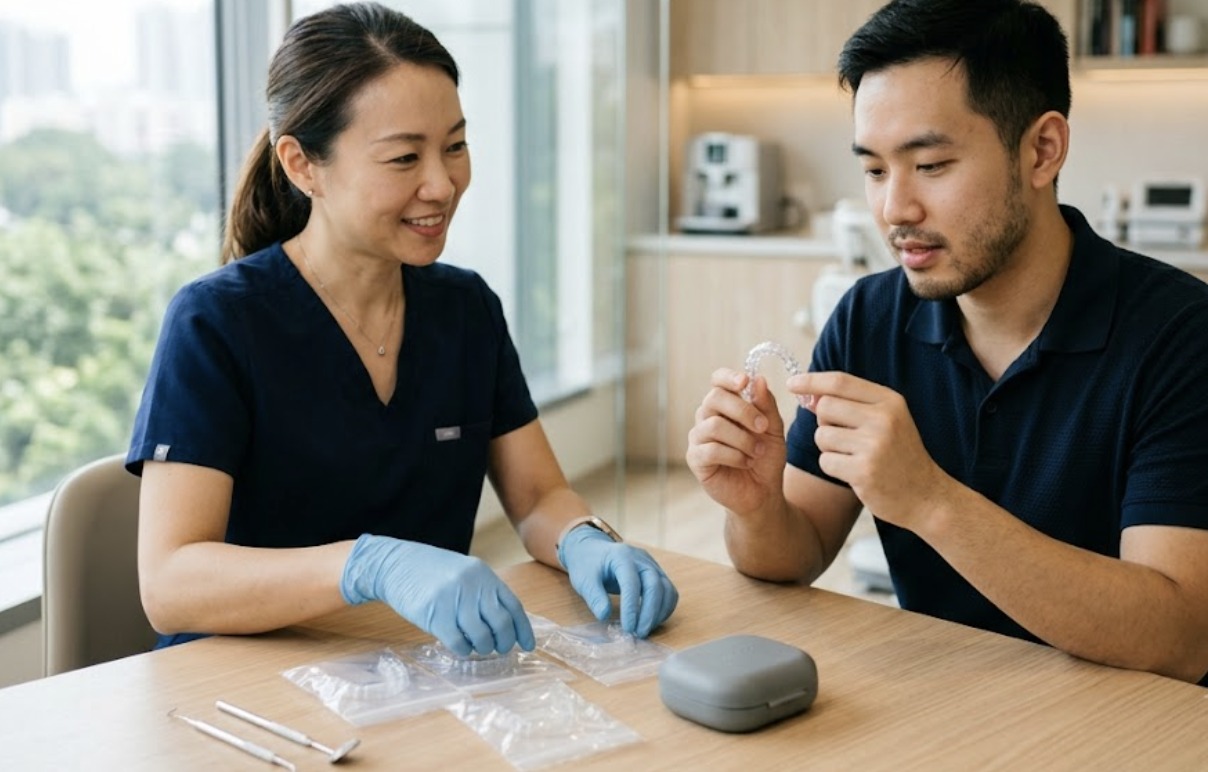
Your aligners only work when you wear them, and they only stay comfortable when you care for them properly. A few small habits protect your treatment timeline and keep every tray fitting the way it should.
This page walks you through wearing, removing, cleaning, and storing your clear aligners. Keep it bookmarked on your phone so the answers are there when you need them.
Important: If anything on this page does not match what Dr. Jen told you at your appointment, follow her instructions first and call our Torrance office with questions.
22 hrs
TYPICAL DAILY WEAR TIME
~2 hrs
OFF FOR MEALS, DRINKS & CLEANING
2 to 3 days
TYPICAL TENDERNESS IN A NEW TRAY
The Daily Basics at a Glance
Six habits carry most of the work. Keep these steady and the rest of your treatment falls into place on its own.
✅ Wear your aligners about 22 hours a day, removing them only to eat, drink anything other than water, and clean your teeth.
✅ Rinse your aligners the moment you take them out, then place them in your case.
✅ Change to your next set exactly as Dr. Jen advised, ideally at night before bed.
✅ Wash your hands with soap and water before you touch your aligners.
✅ Brush and floss after every meal or snack before you put your aligners back in.
✅ Keep every past aligner in a clean plastic bag.

EVERYDAY HANDLING
Wearing and Using Your Aligners
Always wash your hands thoroughly with soap and water before handling your aligners. Clean hands protect both your trays and your gums.
When it is time for a new set, put the new aligners in at night before bed. Sleeping through those first hours helps ease the pressure you may feel at the start of a tray.
Make sure you have the correct aligner for your upper and lower teeth before inserting either one. The upper and lower trays look similar, and they are usually marked, so check the label if you are unsure. You may insert either arch first.
Your Teeth May Feel Tender at First
For the first few days in a new tray, your teeth may feel tender as they begin to move. That feeling is temporary and settles down on its own.
Some patients also notice small ulcers or sore spots inside the mouth during the early days. These usually clear up quickly as your cheeks and tongue adjust.
Tenderness is normal. Sharp pain is not. If you feel sharp pain or significant discomfort, stop wearing the aligner and call our office right away.
STEP BY STEP
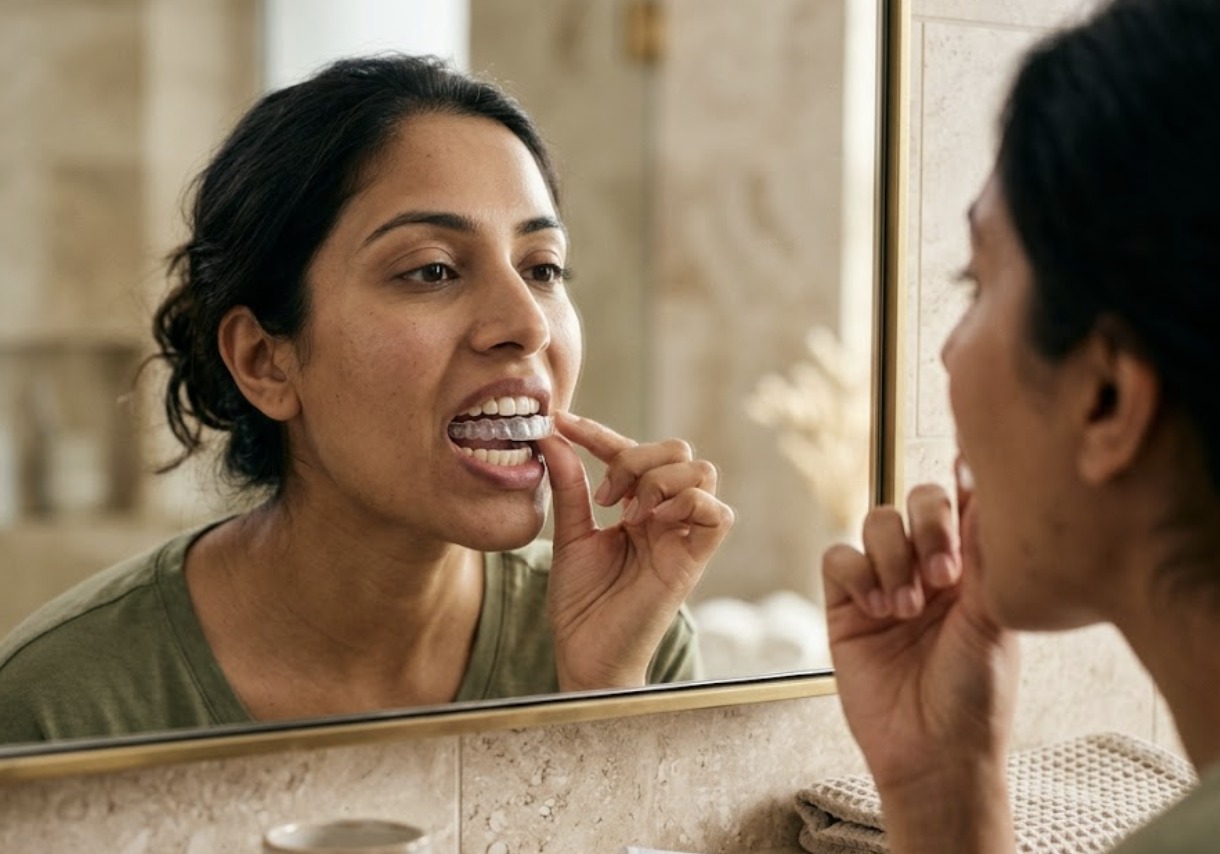
How to Insert Your Aligners
Start at the front teeth and press gently, then work backward toward the molars with light finger pressure. Take your time and let the tray seat itself.
If a tray will not seat fully after a minute or two of gentle pressure, stop and call us. Forcing it usually makes the fit worse.
Do not bite your aligners into position. Biting down to force a tray in can crack it, warp it, or damage an attachment on your tooth.
STEP BY STEP
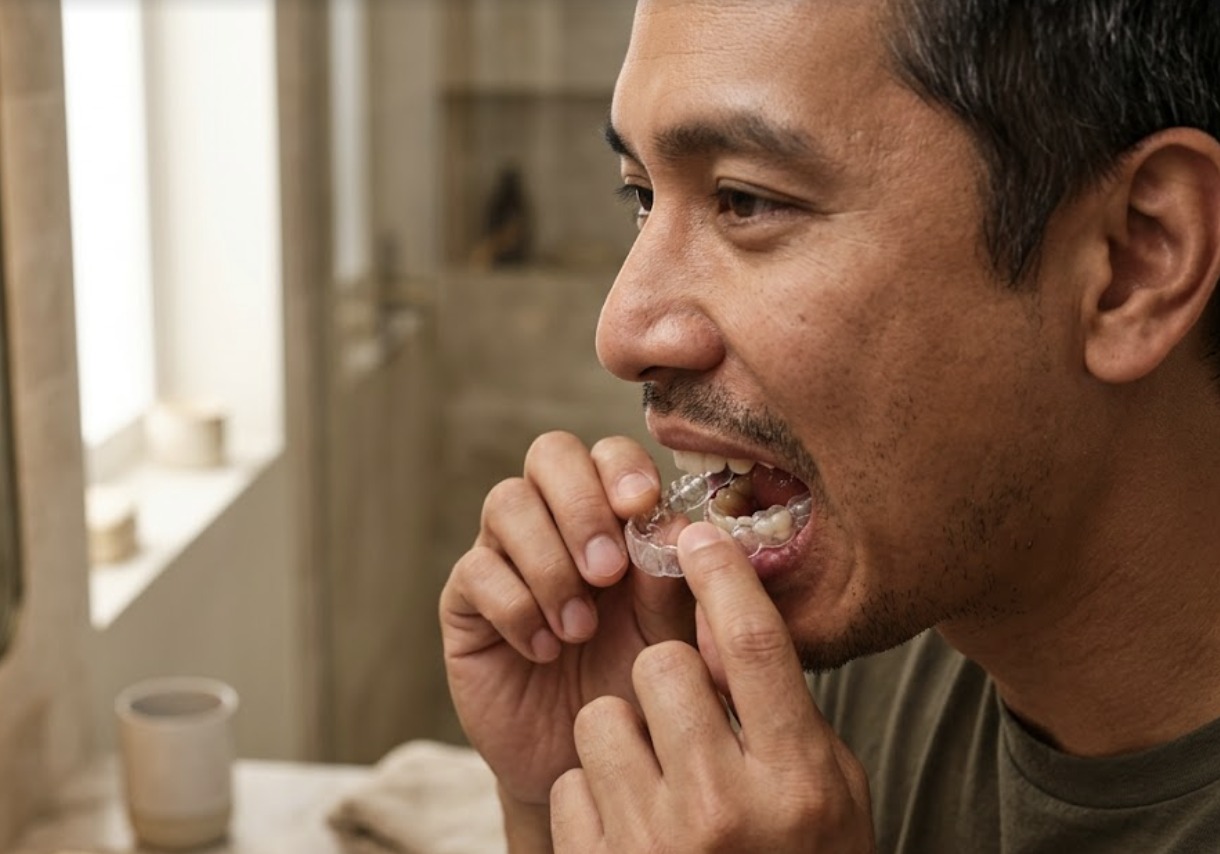
How to Remove Your Aligners
Use your fingers only. Start on one side at the molars, lift gently, and slowly work your way around to the other side.
Rinse the aligner with water as soon as it is out, shake off the excess, and put it in your protective case. Dried saliva turns cloudy and traps bacteria, which is why the immediate rinse matters.
Never use a sharp object to pry your aligners off. Metal tools, pens, and fingernails can chip the plastic and scratch your teeth or gums.
If You Have Attachments
Attachments are the small tooth colored bumps bonded to some of your teeth. They give your aligners something to grip so your teeth move the way the plan calls for.
Removal takes more care when multiple attachments are in place. Work slowly from the back teeth forward and avoid bending or twisting the tray hard to pop it free.
If your aligners are consistently difficult to remove, call our office. We would rather adjust your technique or check an attachment than have you damage a tray.
Changing to Your Next Aligner
Please change your aligners exactly as advised. You may have been given several sets to change through over the coming weeks, and each one is calculated to move specific teeth a specific distance.
TOO SOON
Switching early
Switching early does not speed anything up. Teeth need the full wear time in each tray before they are ready for the next amount of movement.
TOO LATE
Switching late
Switching late is just as costly. Your next aligner is built around where your teeth should be by then, so a delayed change can make the following tray fit poorly.
If you are unsure where you are in the sequence, bring your trays to your next visit, and we will sort it out together.
DAILY CARE
Cleaning Your Aligners the Right Way
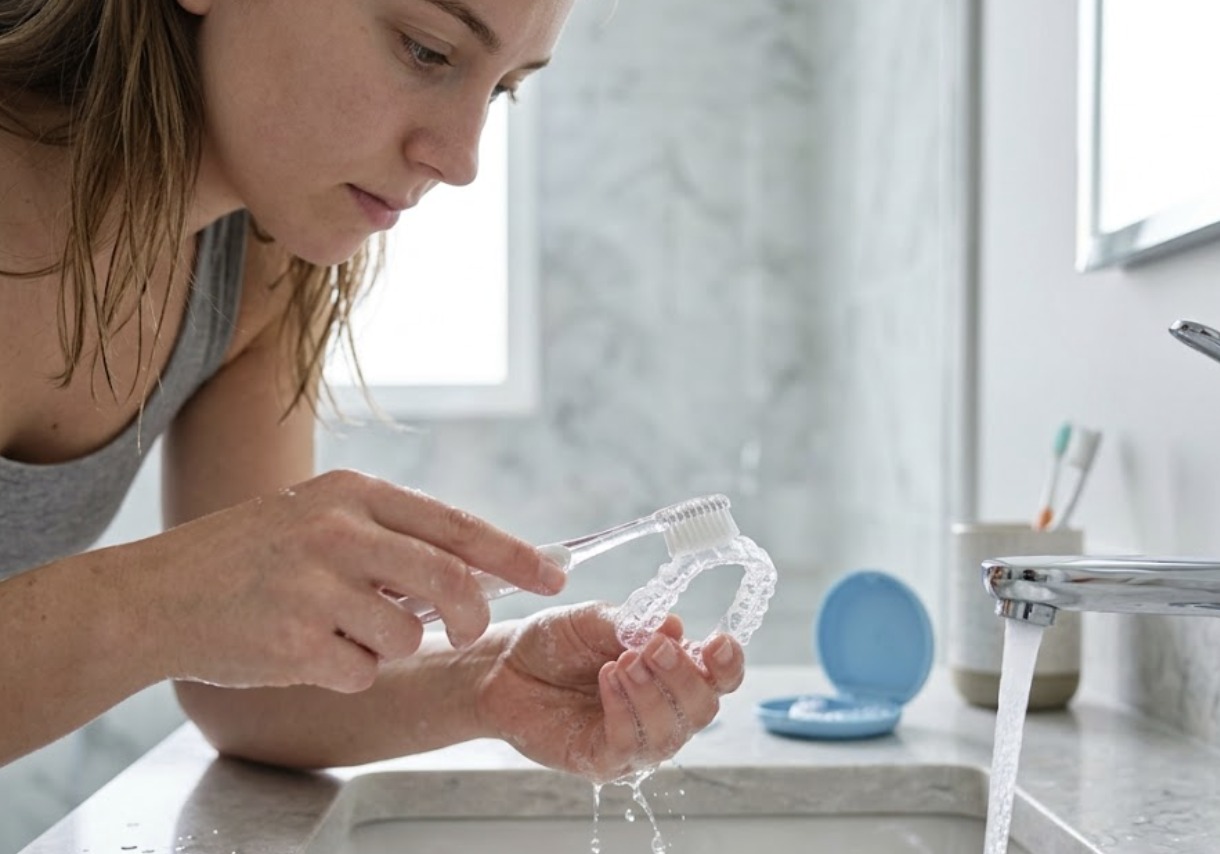
Clean your aligners before every insertion using a soft toothbrush and a small amount of soap, then rinse thoroughly with water.
Skip these products entirely:
- Toothpaste, which is abrasive and dulls the plastic surface
- Denture cleaners
- Mouthwash soaks, which can stain and weaken the material
- Hot water, which can warp the shape of your tray
A dull or cloudy aligner is not just a cosmetic problem. Scratched plastic holds odor and bacteria and shows up far more in photos than a clear tray does.
Eating and Drinking with Aligners
Grazing all afternoon quietly eats into your wear time.
Remove your aligners for everything except plain water. Chewing with trays in can crack them, and hot drinks can distort the plastic.
Coffee, tea, red wine, soda, and juice all stain aligners quickly, and sugary drinks sitting under a tray raise your cavity risk. Take them out, enjoy your drink, then rinse before putting the trays back in.
Aim to finish meals and snacks within your two-hour window off. Grazing all afternoon quietly eats into your wear time.
Brushing and Flossing Between Meals
Proper oral hygiene matters more during aligner treatment than it ever has. Brush and floss after each meal or snack before you reinsert your aligners.
Food and plaque sealed under a tray sit against your enamel for hours. That is how white spots and cavities start in patients who otherwise had healthy teeth.
KEEP A TRAVEL KIT
Keep a small travel kit with a toothbrush, toothpaste, and floss in your bag or car. When cleaning is easy, you actually do it.
DON'T SKIP YOUR DENTIST
Regular hygiene appointments with your general dentist are still recommended throughout treatment for the health of your gums and tissue.
BETWEEN WEARS
Storing Your Aligners
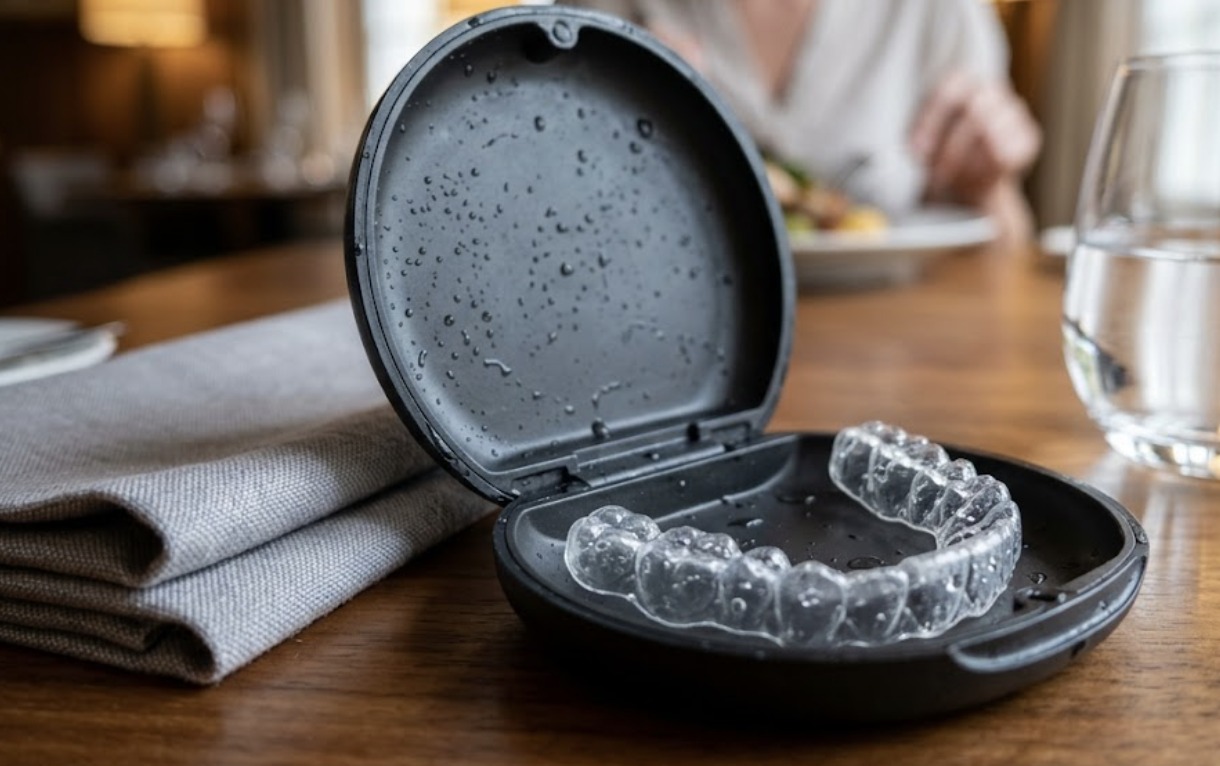
Your starter kit includes an aligner case. Use it every single time your trays are out of your mouth.
#1 reason trays get thrown away: napkins
#2 reason trays get crushed: pockets
Napkins are the number one way aligners get thrown away, and pockets are the number two way they get crushed. The case solves both.
Keep your past aligners in a clean plastic bag. If a current tray goes missing or breaks, an earlier set can serve as a temporary hold while we plan your next step.
AWAY FROM HOME
Lost or Broken Aligner
Call our office for instructions. Do not simply jump ahead to the next tray on your own, and do not go without wearing anything.
Teeth begin drifting back within days, and a few unguided days can undo weeks of progress. A quick phone call usually solves it faster than you expect.
Traveling with Your Aligners
Pack your current tray, your next tray, and your previous tray. That covers you if one is lost or damaged while you are away from Torrance.
Keep them in your carry-on bag rather than a checked suitcase, along with your case, a toothbrush, and floss. Baggage delays should never cost you treatment time.
When to Call Our Torrance Office
Reach out to us if you notice any of the following:
- Sharp pain or significant discomfort while wearing a tray
- An aligner that will not seat fully or will not come off
- A cracked, warped, or lost aligner
- An attachment that has chipped or fallen off your tooth
- A sore spot that has not improved after several days
- Uncertainty about which tray you should be wearing
Call or text us at (310) 543-2711, or email hello@jenuinesmiles.com. Getting a small issue handled early keeps your finish date where it belongs.
What Happens After Your Aligners
Finishing your last tray is the goal, and holding that result is the next step. Retainers keep your teeth in their new positions once active treatment is complete.
Dr. Jen will walk you through your retainer options as you approach the end of treatment, including a same-day retainer so you leave with protection in hand.
COMMON QUESTIONS
Frequently Asked Questions
Quick answers to the clear aligner questions our Torrance patients ask most often.
How many hours a day do I need to wear my clear aligners?
Plan on roughly 22 hours a day, which leaves about two hours for meals, drinks, and cleaning your teeth. Consistent wear is the single biggest factor in staying on schedule. Falling short by even an hour or two daily adds up quickly and can push your finish date back by weeks.
How long will my teeth feel sore after starting a new aligner?
Most patients feel tenderness for the first two to three days in a new tray, then it fades as the teeth settle. Inserting new aligners at night helps you sleep through the strongest pressure. If discomfort turns sharp or lasts beyond a few days, stop wearing that tray and call our Torrance office.
Can I use toothpaste to clean my clear aligners?
No. Toothpaste is abrasive and creates fine scratches that make your aligners look cloudy and hold bacteria. Use a soft toothbrush with a small amount of soap and rinse well with cool water. Skip denture cleaners, mouthwash soaks, and hot water, all of which can damage or warp the plastic.
What should I do if I lose or break an aligner?
Call our office before you do anything else. Depending on where you are in your sequence, Dr. Jen may have you move forward to the next tray, go back to your previous one, or come in for a replacement. That is why keeping past aligners in a clean bag matters so much.
Can I drink coffee with my aligners in?
Only plain water should be consumed with your aligners in place. Coffee stains the plastic, and hot liquids can distort the shape of your tray. Take your aligners out, enjoy your drink, then brush or at least rinse your mouth before you put them back in.
Do I still need to see my regular dentist during aligner treatment?
Yes. Keep your routine cleanings and checkups on schedule throughout orthodontic treatment. Aligners cover your teeth for most of the day, so professional cleanings and healthy gums are important for the tissue underneath. Dr. Jen moves your teeth while your dentist manages your general oral health.
Questions About Your Aligners?
You will always see Dr. Jen at Jenuine Smiles Orthodontics. No associates, no handoffs, and no guessing about who is managing your care.
If something about your aligners feels off, call or text (310) 543-2711 or book a visit at our Torrance Blvd office. We would rather hear from you early than fix a problem later.