
Traditional dental impressions have been part of orthodontic care for many years, but many patients remember them as one of the less comfortable parts of an appointment. The large impression trays and thick materials can feel unpleasant, especially for patients with a sensitive gag reflex.
Today, digital technology offers another option.Dental 3D scanning lets orthodontists capture detailed images of the teeth and bite, creating a digital model that supports treatment planning. At Jenuine Smiles Orthodontics in Torrance, this technology helps patients experience more comfortable orthodontic care while providing the team with accurate information for personalized treatment.
Digital scans are especially useful for orthodontic services such as Invisalign® clear aligners, braces, and ongoing smile evaluations. Instead of relying on physical molds, the orthodontic team can review a detailed 3D model of the teeth and use it as part of the overall treatment process.
What You'll Learn From This Article
- How dental 3D scanning creates a digital model of your teeth
- Why many patients prefer digital scans compared with traditional impressions
- How 3D scanning supports Invisalign and orthodontic treatment planning
- What makes digital imaging helpful for patient education and communication
- What to know about safety and the role of different dental imaging tools
What Is Dental 3D Scanning and How Does It Work?
Dental technology has changed the way orthodontists collect information about a patient’s smile. Instead of creating a physical impression, a digital scanner can capture the shape and position of the teeth to create a detailed 3D representation.
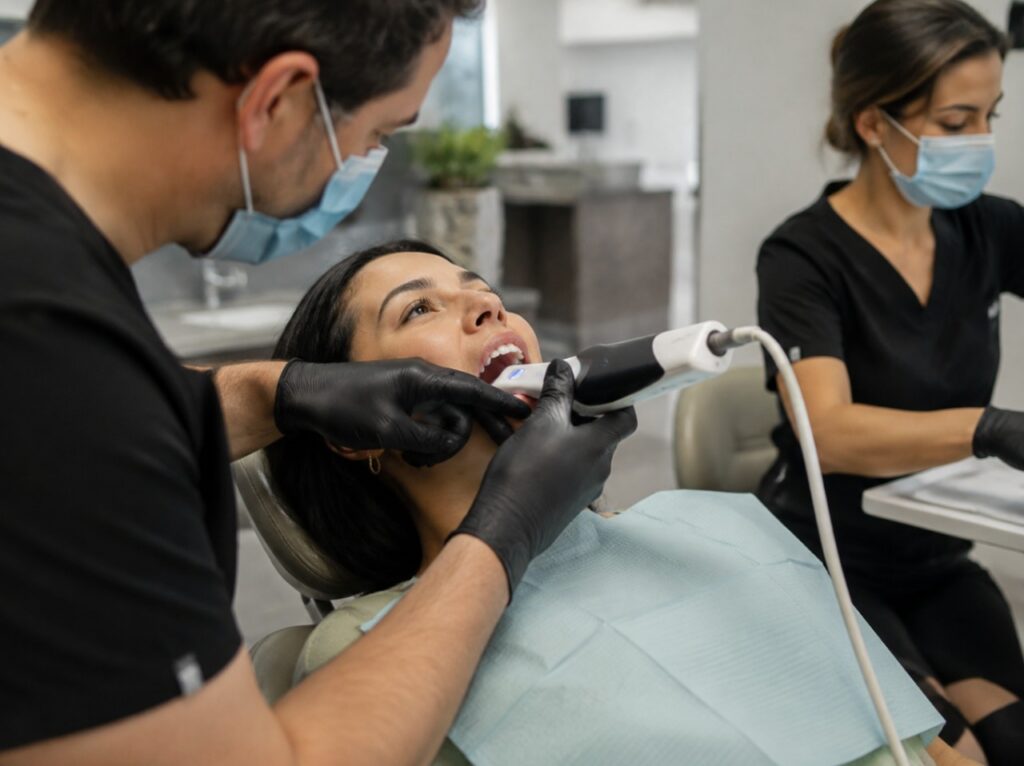
A dental 3D scanner is a handheld device that takes multiple images of the teeth and bite. Specialized software combines these images into a digital model that the orthodontic team can review during treatment planning.
At Jenuine Smiles Orthodontics, 3D scanning helps replace traditional gooey impressions for many orthodontic needs. The process lets the team collect key information while keeping patient comfort in mind.
Understanding the Digital Scanning Process
The process is simple:
- The orthodontic team captures images of your teeth using a digital scanner.
- The scanner creates a detailed digital model of your smile.
- The orthodontist reviews the scan along with your oral health information and treatment goals.
This digital workflow provides orthodontists with another tool for understanding tooth alignment, bite relationships, and treatment considerations.
Research has examined the accuracy and clinical applications of intraoral scanners, showing how digital scanning technology can support modern dental care.
Understanding how the technology works helps explain why more patients choose digital scans during orthodontic visits.
Why Patients Prefer Dental 3D Scanning Over Traditional Impressions

The experience of orthodontic care matters. Many patients appreciate technology that makes appointments feel easier while still providing the information needed for quality treatment planning.
Dental 3D scanning offers several benefits that can improve the patient experience.
A More Comfortable Alternative to Traditional Impressions
Traditional impressions require placing a tray filled with impression material inside the mouth. Some patients find this process uncomfortable or have difficulty tolerating the sensation.
With digital scanning, an orthodontic team uses a small scanner to capture images directly. No impression trays or waiting for materials to set are needed.
This can be especially helpful for patients who:
- Feel uncomfortable with traditional impressions
- Have a sensitive gag reflex
- Prefer a cleaner digital experience during appointments
A Simpler Appointment Process
Digital scans can make the record-taking process easier for both patients and orthodontic teams.
Because the information is captured digitally, the office can store the scan electronically and access the 3D model when reviewing treatment options or monitoring progress.
Better Understanding of Your Smile
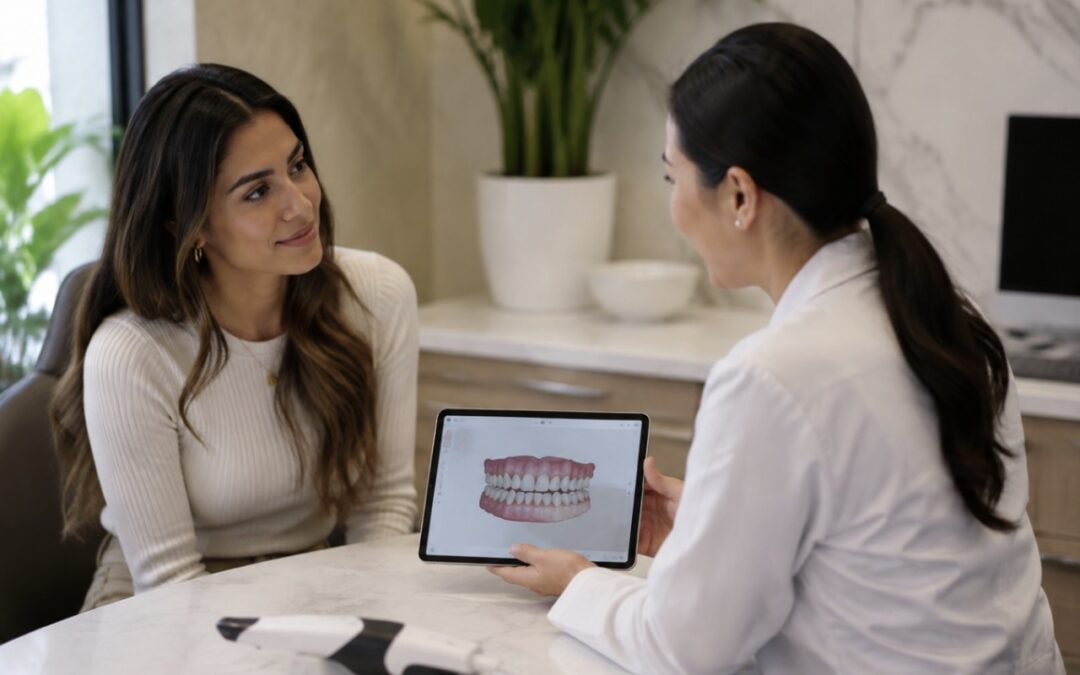
A physical impression creates a mold, but a digital scan creates a model you can view on a screen.
Seeing a 3D model can help patients better understand their teeth, bite, and orthodontic recommendations. This visual approach supports clearer conversations between the orthodontist and patient.
Understanding patient comfort is only one part of digital scanning. The technology also plays an important role in creating personalized orthodontic treatment plans.
How Dental 3D Scanning Supports Invisalign® and Orthodontic Treatment Planning
Every smile has different needs. Tooth position, bite alignment, oral health, and personal goals all influence the type of orthodontic care a patient may need.
At Jenuine Smiles Orthodontics, we use 3D scanning to support customized treatment planning for patients in Torrance and surrounding communities.
Creating a Detailed View of Your Teeth and Bite
A dental 3D scan provides detailed information about the surface of your teeth and their relationship to one another.
An orthodontist may use digital scans to review:
- Tooth alignment
- Spacing and crowding concerns
- Bite relationships
- Changes during orthodontic treatment
The scan is not the only factor used when creating a treatment plan. Your orthodontist also considers your oral health, clinical examination, and individual goals.
Supporting Invisalign Treatment
Clear aligner treatment requires careful planning to help guide tooth movement over time. A digital scan can support the Invisalign workflow by providing a detailed record of your current smile.
Jenuine Smiles Orthodontics offers Invisalign clear aligners and creates treatment plans based on each patient’s needs. As a top Invisalign provider, the practice uses advanced tools alongside orthodontic expertise to help patients explore their options.
Digital models also help patients understand how orthodontic technology supports their care from the beginning of treatment through follow-up visits.
How 3D Models Improve Patient Education and Communication
Orthodontic care involves many decisions, and understanding those decisions can make the process feel more comfortable.
A 3D model gives patients a visual way to discuss their smile and learn more about recommended treatment options.
Making Orthodontic Conversations Easier
Instead of relying only on photographs or verbal explanations, orthodontists can use digital images to show the teeth's current condition.
A 3D model may help explain:
- Why certain orthodontic treatments are recommended
- How teeth are positioned
- How bite concerns are evaluated
- How treatment progress may be monitored
At Jenuine Smiles Orthodontics, patient education is an important part of care. Dr. Jen and the team take time to explain treatment options and help patients feel informed about their orthodontic decisions.
Technology supports communication, but the patient-orthodontist relationship remains at the center of care.
Is Dental 3D Scanning Safe?
Many patients have questions about dental imaging and safety. Understanding the differences between digital scans and other imaging methods can help clarify matters.
Dental 3D scanning uses optical technology to capture images of the teeth. It works differently from X-ray-based imaging, such as cone beam computed tomography (CBCT).
CBCT creates three-dimensional images using X-rays and may be recommended when an orthodontist or dentist needs more detailed information about certain dental structures. The FDA explains that healthcare providers should consider the clinical need for this type of imaging and weigh the benefits against potential radiation exposure.
Different imaging tools provide different types of information. A dental professional determines the appropriate imaging type based on the patient’s needs.
| Imaging Method | Information Provided | Common Uses |
| Dental 3D scanning | Digital images of teeth and bite surfaces | Orthodontic records, digital models, treatment planning |
| Dental X-rays | Images of internal tooth and bone structures | Evaluating areas not visible during an oral examination |
| CBCT imaging | Detailed 3D X-ray images of dental structures | Additional evaluation when clinically necessary |
Dental 3D scanning is a useful tool, but it does not replace all types of dental imaging. Your orthodontist chooses technology based on what information is needed for your care.
What to Expect During a Dental 3D Scan Appointment at Jenuine Smiles Orthodontics
For many patients, a digital scan is a straightforward part of the orthodontic consultation or treatment process.
The appointment focuses on collecting accurate information while keeping the experience comfortable and easy to understand.
Step 1: Discussing Your Smile Goals
Your orthodontic visit begins with a conversation about your concerns, goals, and treatment options.
The team at Jenuine Smiles Orthodontics works with children, teens, and adults to create personalized orthodontic plans.
Step 2: Capturing the Digital Scan
During the scan, the orthodontic team uses a handheld scanner to capture images of your teeth and bite.
The process does not involve traditional impression materials, which many patients appreciate.
Step 3: Reviewing Your Digital Model
The completed 3D model helps the orthodontic team evaluate your smile and discuss possible treatment approaches.
Step 4: Planning Your Next Steps
After reviewing your information, your orthodontist can discuss options such as Invisalign clear aligners, braces, retainers, or continued monitoring.
A comfortable experience starts with the right combination of technology, communication, and personalized care.
Why Choose a Torrance Orthodontist With Digital Scanning Technology?
When choosing an orthodontist, technology matters, but it is also important to find a practice that prioritizes personalized attention and quality care.
Jenuine Smiles Orthodontics focuses exclusively on orthodontics. Dr. Jen and the team provide care for children, teens, and adults with treatment options including Invisalign clear aligners, traditional braces, clear braces, TMJ treatment, and more.
The practice uses dental 3D scanning to create a more comfortable experience while supporting accurate treatment planning and patient education.
Located in the Torrance Civic Plaza and Medical Center, Jenuine Smiles Orthodontics provides convenient access for families and individuals seeking specialized orthodontic care in the area.
Modern technology can make orthodontic visits easier, but the goal remains the same: helping each patient achieve a healthy, confident smile with care that fits their needs.
Conclusion: A More Comfortable Way to Begin Your Smile Journey
Dental 3D scanning has become an important part of modern orthodontic care because it offers a comfortable way to collect detailed information about your teeth and bite.
For many patients, digital scans provide a simpler alternative to traditional impressions while helping orthodontists create personalized treatment plans and explain recommendations more clearly.
At Jenuine Smiles Orthodontics in Torrance, we combine advanced technology with a patient-focused approach. If you are considering Invisalign, braces, or other orthodontic options, schedule a free consultation to learn how 3D scanning can support your smile goals.
Frequently Asked Questions
1. What is dental 3D scanning?
Dental 3D scanning is a digital imaging process that captures detailed images of your teeth and bite. The scan creates a 3D model that orthodontists can use for treatment planning and patient education.
2. Is dental 3D scanning more comfortable than traditional impressions?
Many patients prefer dental 3D scanning because it does not require impression trays or materials. Comfort can vary from person to person, but digital scanning is often a preferred option for patients who dislike traditional impressions.
3. How does dental 3D scanning help with Invisalign treatment?
Dental 3D scanning creates a detailed digital record of your teeth that can support the Invisalign treatment workflow. Your orthodontist reviews this information along with your overall oral health and treatment goals.
4. Does dental 3D scanning replace X-rays?
No. Dental 3D scanning and X-rays provide different types of information. A digital scan captures the surface details of teeth, while X-rays can show structures that cannot be seen from the outside.
5. How long does a dental 3D scan appointment take?
The length of a scan depends on the visit's purpose and the patient’s needs. In many cases, the process can be completed during a regular orthodontic appointment. Your orthodontic team can explain what to expect before your scan.