
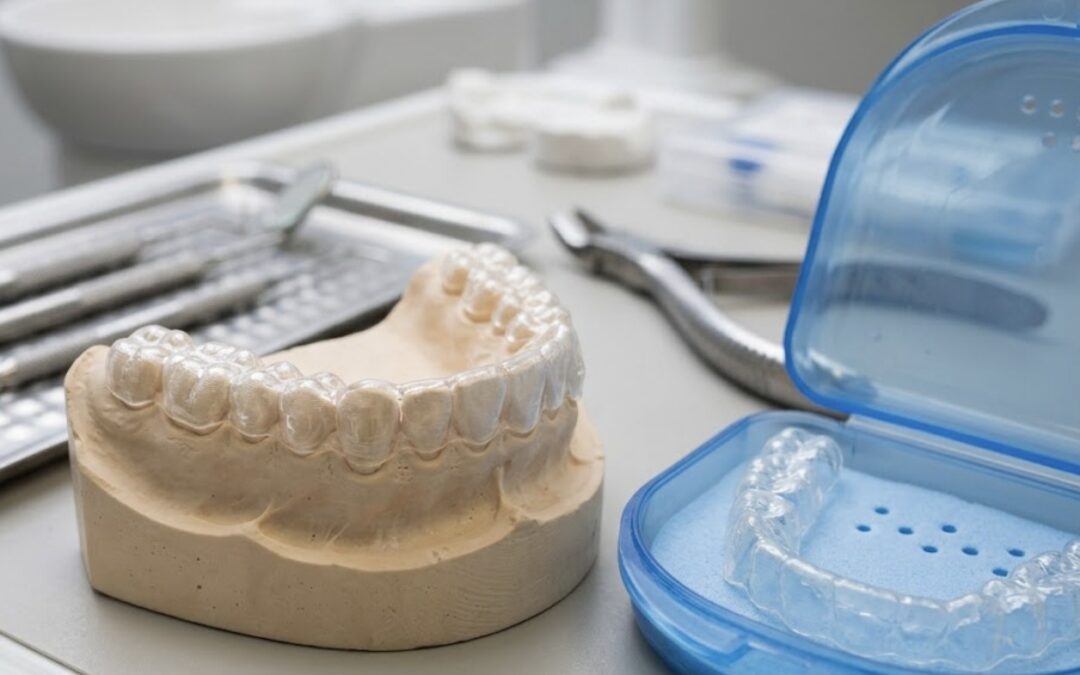
The braces are off, the final Invisalign tray is complete, and your teeth look the way you hoped. There is just one more part of treatment to manage: wearing your retainer.
A clear retainer for teeth helps maintain the positions achieved during orthodontic treatment. Teeth can gradually shift as the bone, gums, and other supporting tissues adapt. Tooth positions may also change naturally with age.
The right retainer, combined with consistent wear and proper care, can help protect the time and effort you put into your smile. Here are five things to know before wearing or replacing a clear retainer in Torrance.
What You’ll Learn From This Article
- Why teeth can shift after braces or Invisalign treatment
- How clear retainers are made and what a proper fit feels like
- Why an Invisalign aligner is not the same as a retainer
- How to wear, clean, and store a clear retainer
- When damage, tooth movement, or dental work may require a new retainer
1. A Clear Retainer Helps Maintain Your Orthodontic Results
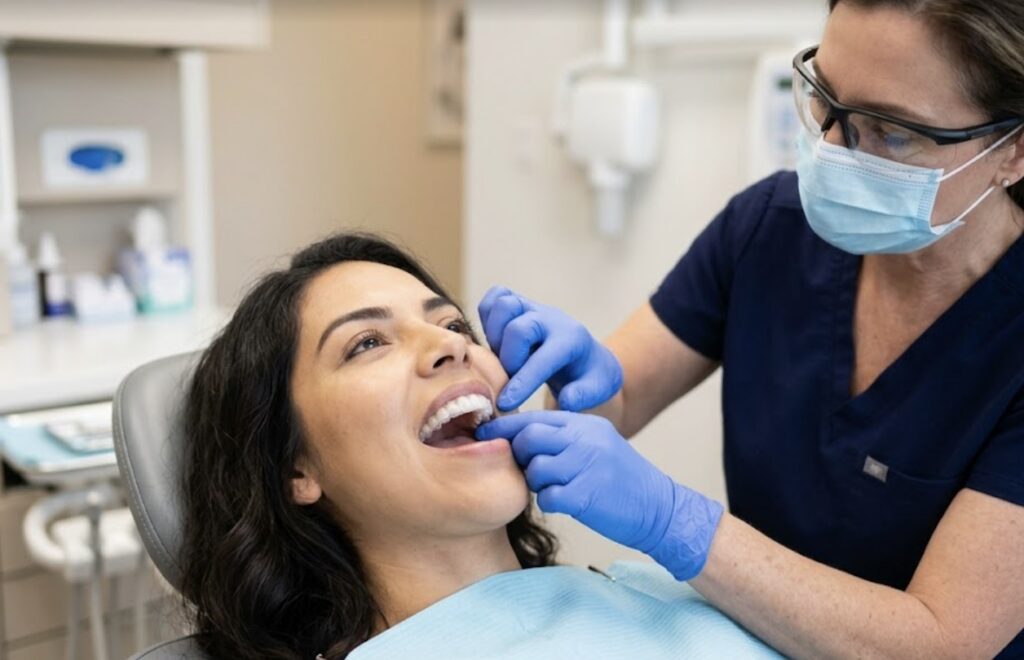
Braces and clear aligners move teeth by applying carefully planned pressure. When active treatment ends, the teeth may look straight, but the tissues supporting them still need time to adjust.
A retainer helps hold the teeth in their corrected positions during this period. It also provides ongoing support as your mouth continues to change.
Why teeth may move after braces or aligners
Teeth sit within living bone and connect to the surrounding tissues through the periodontal ligament. These structures remodel as an orthodontist moves the teeth.
Removing a brace or finishing the last set of aligners does not immediately stabilize every tooth. Without proper retention, some teeth may begin moving toward their earlier positions. Orthodontists often refer to this movement as relapse.
A clinical study comparing Hawley and vacuum-formed retainers found that the retention force of both appliances decreased during six months of use. Although vacuum-formed retainers maintained greater force in this study, the researchers did not randomly assign patients and evaluated only upper retainers. The findings do not prove that one design works best for everyone, but they do show why fit and condition need to be checked over time.
A retainer cannot guarantee that your teeth will never change. Wearing it as directed can help limit unwanted shifting and support the result of your orthodontic treatment.
You may need upper and lower retainers
Some patients receive clear retainers for both the upper and lower teeth. Others may use different retainer designs on each arch.
Your orthodontist may consider several factors when recommending a retention plan:
- Your original tooth positions
- The type of orthodontic treatment you completed
- Your bite and jaw relationship
- The amount of tooth movement achieved
- Your age and growth pattern
- Your oral health and hygiene habits
- Your likelihood of wearing a removable appliance consistently
Retention involves more than keeping the front teeth looking straight. Your orthodontist also needs to consider how the upper and lower teeth meet.
Once you understand why retention matters, the next question is how to create a clear retainer that fits your smile.
2. Clear Retainers Are Custom-Made for Your Teeth
A clear retainer is a thin, transparent appliance that fits closely over the teeth. You may also hear this appliance referred to as a vacuum-formed or Essix-style retainer.
Because it is removable, you can take it out to eat, brush, and floss. Its transparent material also makes it less noticeable than a traditional Hawley retainer with a visible wire.
How clear retainers are made
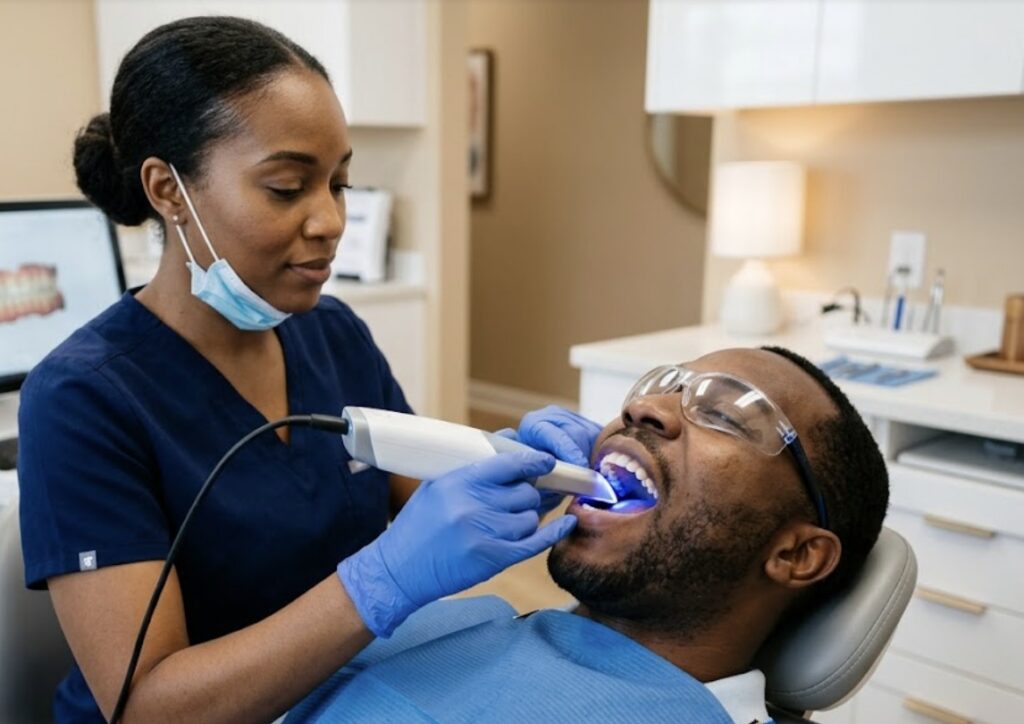
Retainers are made from an accurate record of your current tooth positions. An orthodontic office may capture that record with a digital scan or a traditional impression using dental putty.
A digital scanner records detailed images of the teeth and bite. Software combines those images to create a three-dimensional model. The retainer is then formed to match that model.
At Jenuine Smiles Orthodontics, modern digital impressions help Dr. Jen evaluate the teeth and bite without relying on traditional putty impressions in every case. The practice also provides same-day retainers for eligible patients, which may be helpful when an appliance is lost or damaged.
A custom clear retainer is not the same as a store-bought mouthguard. Its shape reflects your individual teeth and the alignment achieved through professional orthodontic care.
What a properly fitting retainer should feel like
A new retainer may feel snug when you first place it over your teeth. That is often expected because the appliance must sit securely enough to maintain tooth position.
It should not cause severe pain, cut into the gums, rock back and forth, or leave large spaces between the plastic and the teeth. It should also sit fully without excessive pressure.
Contact your orthodontist when:
- The retainer will not fit over one or more teeth
- It causes sharp or persistent discomfort
- The plastic appears bent or warped
- A crack changes the fit
- The appliance repeatedly comes loose
- Your bite feels different while wearing it
Do not heat, trim, bend, or reshape a clear retainer at home. Heat can distort thermoplastic material, while trimming it may affect retention or create rough edges.
A proper fit supports retention, but it does not turn a retainer into an active tooth movement appliance.
3. A Clear Retainer Is Not the Same as an Invisalign Aligner

Clear retainers and Invisalign aligners may look similar when they are sitting in a case. Their purposes, materials, and wear instructions can be different.
An Invisalign aligner belongs to a planned sequence. Each tray has a slightly different shape that applies controlled pressure to selected teeth. As you move through the series, the aligners gradually straighten the teeth according to your treatment plan.
A clear retainer usually matches the final or current positions of your teeth. Its primary job is to hold those positions rather than continue moving them.
| Feature | Clear Retainer | Invisalign Aligner |
| Main purpose | Helps maintain tooth position | Gradually moves teeth |
| Treatment stage | Retention after active treatment | Active orthodontic treatment |
| Number of appliances | Usually one current appliance per arch | A prescribed series of trays |
| Replacement timing | Replaced when lost, damaged, worn, or poorly fitting | Changed according to the treatment schedule |
| Clinical oversight | Fit and wear schedule set by an orthodontist | Tooth movement is planned and monitored by an orthodontist |
Can the final Invisalign tray serve as a retainer?
An orthodontist may ask a patient to continue wearing the final aligner for a short period while a new retainer is being prepared. That temporary step does not mean the final aligner should automatically become a long-term retainer.
An aligner may have already experienced wear during treatment. It may also differ from a retainer in thickness, material, and intended use.
Follow the instructions Dr. Jen or your treating orthodontist provides. Do not assume that an old aligner can replace a professionally prescribed retainer indefinitely.
At Jenuine Smiles Orthodontics, Dr. Jen treats kids, teens, and adults with Invisalign clear aligners, metal braces, and clear braces. Because she personally oversees each patient’s care, the retention plan can reflect the original treatment, current bite, oral health, and risk of future movement.
Knowing which appliance you have is important. Wearing it on the right schedule matters just as much.
4. Your Orthodontist Should Set Your Retainer Wear Schedule

There is no single retainer schedule that suits every patient. Your instructions may depend on how far your teeth moved, the stability of your bite, your age, and the type of retainer you received.
Retainer wear may be more frequent at first
Many patients wear removable retainers for longer periods soon after completing orthodontic treatment. They may later move to nighttime wear once their orthodontist determines that the result is stable enough.
Do not reduce your wear time simply because your teeth still look straight or the retainer feels comfortable. Early movement can be subtle and may not be obvious in the mirror.
Teeth can also change throughout adulthood. For that reason, many orthodontists recommend ongoing nighttime wear. Your instructions may differ, so follow the schedule created for you rather than a general schedule found online.
What does a tight retainer mean?
A retainer may feel a little snug after a brief interruption in wear. Mild pressure can suggest that the teeth have started to shift.
That does not mean you should force an appliance into place. Stop wearing it and contact your orthodontist if it:
- Causes significant pain
- Will not seat completely
- Requires strong pressure to insert
- Leaves a visible gap over certain teeth
- Changes the way your bite feels
- Appears cracked, twisted, or distorted
A tight retainer may indicate tooth movement, material changes, or both. An orthodontic evaluation can identify the cause and determine whether you need a new retainer or another form of treatment.
The more consistently you follow your prescribed schedule, the easier it is to focus on routine cleaning and maintenance instead of correcting problems caused by missed wear.
5. Cleaning Your Clear Retainer Supports Oral Health
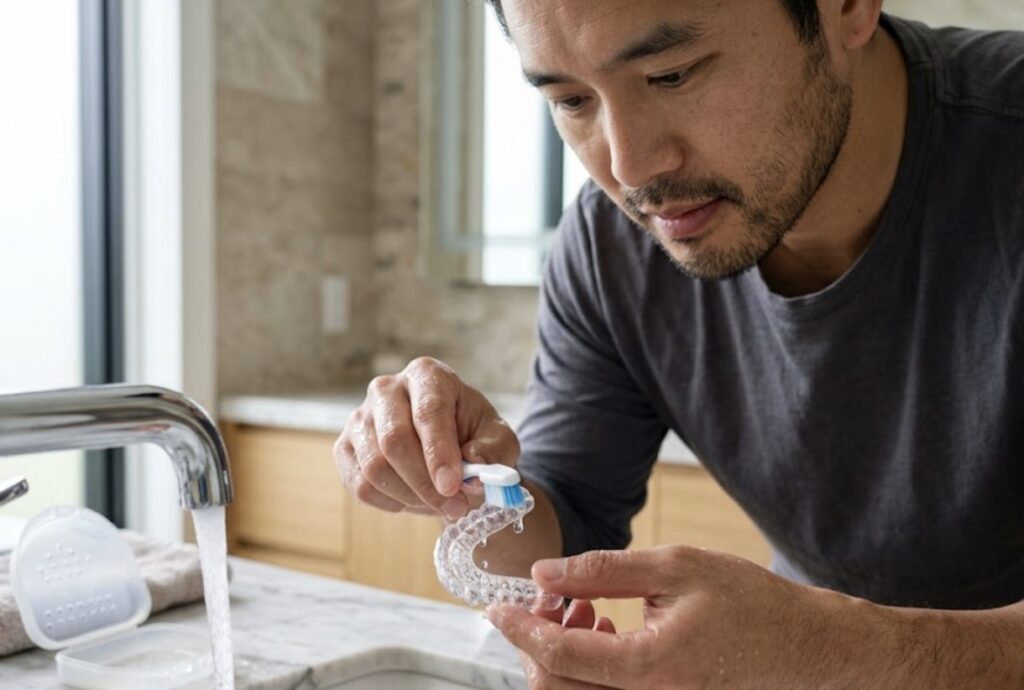
A retainer remains in close contact with your teeth and saliva for several hours at a time. Plaque, food residue, and microorganisms can collect on its surfaces if you do not clean it regularly.
Proper appliance care works alongside brushing, flossing, and professional dental care. Cleaning your retainer does not replace cleaning your teeth.
How to clean a clear retainer
Always follow the instructions from your orthodontic team, as cleaning recommendations can vary by material.
General care may include:
- Rinse the appliance with cool or lukewarm water after removing it.
- Gently clean its surfaces with a separate soft toothbrush.
- Use only cleaning products approved for your retainer.
- Brush and floss before putting the appliance back in your mouth.
- Wash the storage case regularly and allow it to dry.
- Check the retainer for cracks, rough edges, or changes in shape.
A laboratory study of cleaning methods for thermoplastic orthodontic materials examined brushing, chemical soaking, ultrasonic cleaning, and combined methods for removing Streptococcus mutans biofilm. Because the study took place under controlled laboratory conditions, its results do not establish one cleaning method as best for every appliance. The material used and the orthodontist’s instructions still matter.
Avoid abrasive toothpaste unless your orthodontic team confirms that it is appropriate. Abrasive products may scratch the plastic, making the retainer appear cloudy.
Never use boiling or very hot water. Heat may warp the appliance and change its fit. Bleach, harsh household cleaners, and unapproved soaking mixtures may also damage the material or leave irritating residue.
Store your retainer safely
Place the appliance in its protective case whenever you remove it. Wrapping it in a napkin or tissue makes it easy to accidentally throw away.
Keep the retainer away from:
- Direct sunlight
- Hot vehicles
- Heating appliances
- Pets
- Loose storage in pockets, backpacks, or purses
Contact the orthodontic office if you notice persistent odor, heavy buildup, roughness, cracks, or cloudiness that does not improve with proper cleaning.
Good daily care can help protect the appliance, but even a well-maintained retainer may eventually need to be replaced.
When Do You Need a New Retainer?
Clear retainers do not last forever. Daily wear, removal, cleaning, clenching, and tooth grinding can gradually change the material.
You may need a new retainer if your current one:
- Has cracked or split
- Has sharp or rough edges
- Looks warped
- Feels unusually loose
- No longer seats completely
- Rocks when you bite
- Has persistent buildup or odor
- Was lost or accidentally discarded
- No longer fits after dental treatment
Fillings, crowns, veneers, implants, and other dental work can change the shape of a tooth enough to affect retainer fit. Tell your dentist that you wear a retainer before having restorative work. Your dentist and orthodontist can determine whether you need a replacement afterward.
Contact your orthodontic office promptly if you lose or damage the appliance. Teeth do not shift at the same speed in every person, but delaying a replacement may allow enough movement to affect the fit of a new retainer.
A replacement is usually created from your current tooth positions. If noticeable movement has already occurred, your orthodontist may need to determine whether a new retainer, limited aligner treatment, or another plan makes sense.
Retainer condition is one part of the decision. The type of appliance also affects fit, care, and long-term use.
Clear, Hawley, and Fixed Retainers Serve Different Needs
Clear retainers are popular, but they are not the only option. Your orthodontist may recommend a Hawley retainer, a fixed retainer, or a combination based on your teeth and bite.
A clear or Essix style retainer fits closely over the teeth. It is discreet and removable, but the plastic may crack, cloud, loosen, or warp over time.
A Hawley retainer consists of an acrylic base and a wire that runs across the front of the teeth. The wire may allow certain adjustments, although the appliance is more noticeable.
A fixed retainer usually consists of a thin wire bonded behind selected teeth. You do not need to remember to insert it each night, but cleaning around the wire requires careful attention. The wire or bonding material may also need repair.
Research comparing these options has not identified one retainer as the right choice for every patient. A systematic review and meta-analysis of periodontal health reported more favorable plaque and gingival measurements among Hawley retainer users than among vacuum-formed retainer users in the included studies. The authors also noted that the available evidence was limited and that more high-quality research was needed.
These findings do not mean clear retainers are unsafe. They show why oral hygiene, proper appliance care, and professional monitoring remain important.
Some patients use more than one design, such as a bonded lower retainer paired with removable upper and lower nighttime retainers. Dr. Jen can explain why a specific option or combination may be a good fit for your treatment history.
With those differences in mind, the following answers cover several questions patients often ask about clear retainers.
Frequently Asked Questions About Clear Retainers in Torrance
1. How long should I wear a clear retainer for teeth?
Your wear schedule depends on your orthodontic treatment, bite, age, tooth positions, and risk of movement. Many patients start with more frequent wear before moving to nighttime use. Follow your orthodontist's instructions rather than changing the schedule based on how the retainer feels.
2. Can a clear retainer straighten teeth that have shifted?
A retainer primarily holds teeth in position. It may feel snug after a brief hiatus from wear, but it should not be forced over teeth that have noticeably moved. An orthodontist can assess whether you need a new retainer, limited aligner treatment, or another option.
3. Is an Essix retainer the same as Invisalign?
No. An Essix-style retainer generally maintains the current position of the teeth. Invisalign uses a planned series of aligners to move teeth. Although the appliances may look similar, they have different purposes and wear instructions.
4. Can I clean my retainer with a toothbrush?
A separate soft toothbrush can often be used to gently clean a retainer. Avoid abrasive toothpaste and use only products recommended for the material. Cool or lukewarm water is safer than hot water, which can distort the plastic.
5. How do I know when I need a new clear retainer for teeth?
Contact your orthodontist if the appliance cracks, warps, becomes loose, develops sharp edges, or no longer fits completely. You may also need a new retainer after losing the original or completing dental work that changes the shape of a tooth.
Need a New Clear Retainer? Schedule Your Complimentary Consultation
A clear retainer can help maintain the alignment achieved with braces or Invisalign, but it requires consistent wear, daily care, safe storage, and periodic evaluation.
Have questions about a clear retainer for teeth in Torrance, or think your current appliance may need replacing? Schedule a complimentary consultation with Dr. Jen at Jenuine Smiles Orthodontics. We will assess your teeth, bite, and retainer fit, then explain the next appropriate step for your smile.