

Straighter teeth can make a real difference in how your smile looks and how your bite functions, but not everyone wants to wear visible brackets and wires. That is one reason clear aligners for teeth have become a popular orthodontic option for teens and adults who want a more discreet approach.
Clear aligners are removable, nearly invisible trays designed to move teeth gradually through a planned series of steps. They can work well for many orthodontic concerns, including certain cases of crowding, spacing, and bite problems. Still, they are not the right treatment for every person or every type of tooth movement.
At Jenuine Smiles Orthodontics in Torrance, Dr. Jen treats kids, teens, and adults with Invisalign® clear aligners, metal braces, clear braces, and other orthodontic options. The goal is not to choose the most popular appliance. It is to choose the treatment that fits your teeth, bite, oral health, daily routine, and goals.
What You'll Learn From This Article
- How clear aligners move teeth
- Which orthodontic concerns may respond well to aligner treatment
- Five signs that you may be a good candidate
- When traditional braces may make more sense
- What clear aligner treatment requires from you
- How Dr. Jen evaluates aligner candidacy in Torrance
- What kids, teens, and adults should consider before treatment
What Are Clear Aligners and How Do They Straighten Teeth?
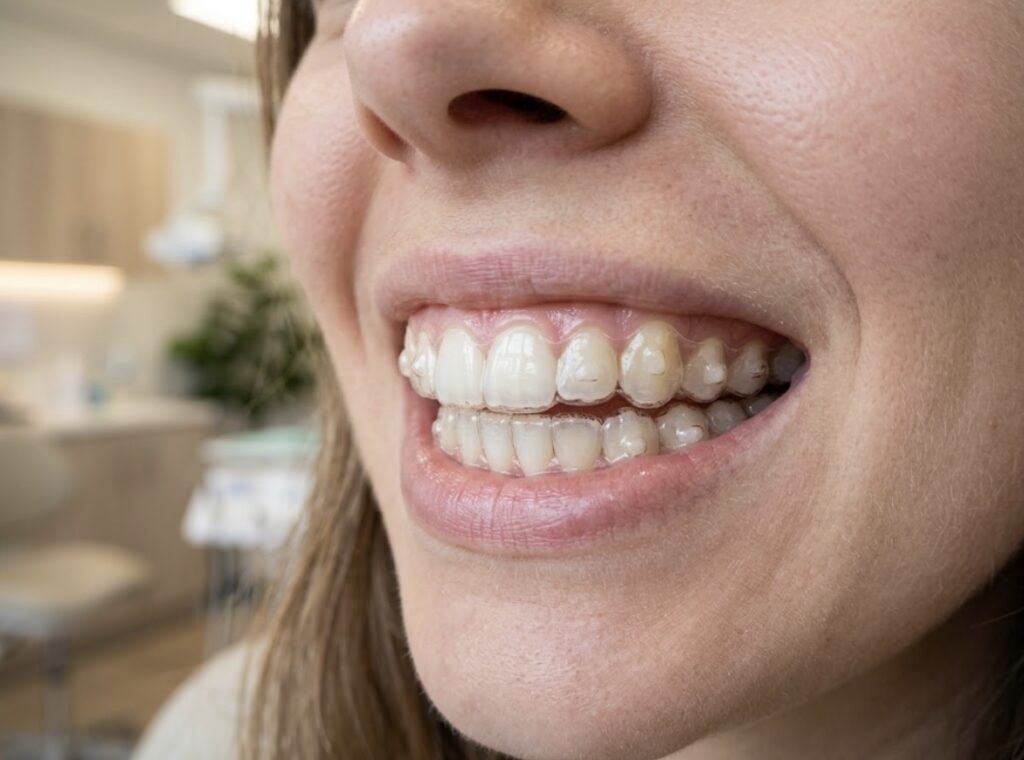
Clear aligners are custom trays that fit over your teeth and apply gentle, controlled pressure to guide movement over time. Instead of brackets and wires, aligner treatment uses a sequence of trays, each designed to move selected teeth closer to their planned positions.
How Clear Aligner Treatment Moves Teeth
Each aligner represents one stage of your orthodontic plan. You wear one set for the time your orthodontist prescribes, then move to the next tray in the sequence.
The process starts with a detailed evaluation of your teeth and bite. Digital scans create a 3D model used to plan how each tooth needs to move. The team then makes clear aligners to match that treatment sequence.
A review published in the Journal of Orthodontic Science describes clear aligner therapy as a system that uses custom trays and controlled orthodontic forces to move teeth gradually. It also notes that digital planning has expanded the range of cases orthodontists can consider for this type of treatment.
Why Clear Aligners Appeal to Many Patients
The main appeal is easy to understand. Clear aligners are nearly invisible when worn, which can make them less noticeable in school, at work, in photos, or during social events.
Aligners are removable, too. You can take them out for meals, brushing, and flossing. That can make everyday oral hygiene easier than cleaning around fixed brackets and wires.
The tradeoff is responsibility. A removable appliance only works when you wear it as directed. If aligners stay out too long or are worn inconsistently, teeth may not track as planned.
That makes candidacy about more than appearance. The next question is which orthodontic problems aligners can actually treat well.
What Orthodontic Problems Can Clear Aligners Treat?
Clear aligner treatment has become more capable over time, but the best results still depend on proper case selection.
Crowded or Crooked Teeth
Crowded teeth occur when there is not enough room for the teeth to line up properly. Some teeth may overlap, rotate, or erupt outside their ideal positions.
Many mild to moderate crowding cases can be treated with clear aligners. An orthodontist may create space through controlled tooth movement, expansion, reshaping between teeth, or other techniques depending on the case.
However, visible crowding alone doesn't tell the full story. Root position, bite relationships, available space, and the type of movement required all affect the treatment plan.
Spacing and Certain Bite Problems
Clear aligners may also be used for spaces between teeth and selected cases involving overbite, underbite, crossbite, or open bite.
Some movements are easier to predict than others. A 2025 systematic review found that clear aligners are well established for many mild-to-moderate malocclusions, while more severe skeletal problems, impacted teeth, and certain complex movements may require another approach.
That distinction matters because two people can have smiles that look similar but need very different orthodontic mechanics.
Once the problem type is clear, lifestyle and oral health become equally important parts of the decision.
5 Signs You May Be a Good Candidate for Clear Aligners
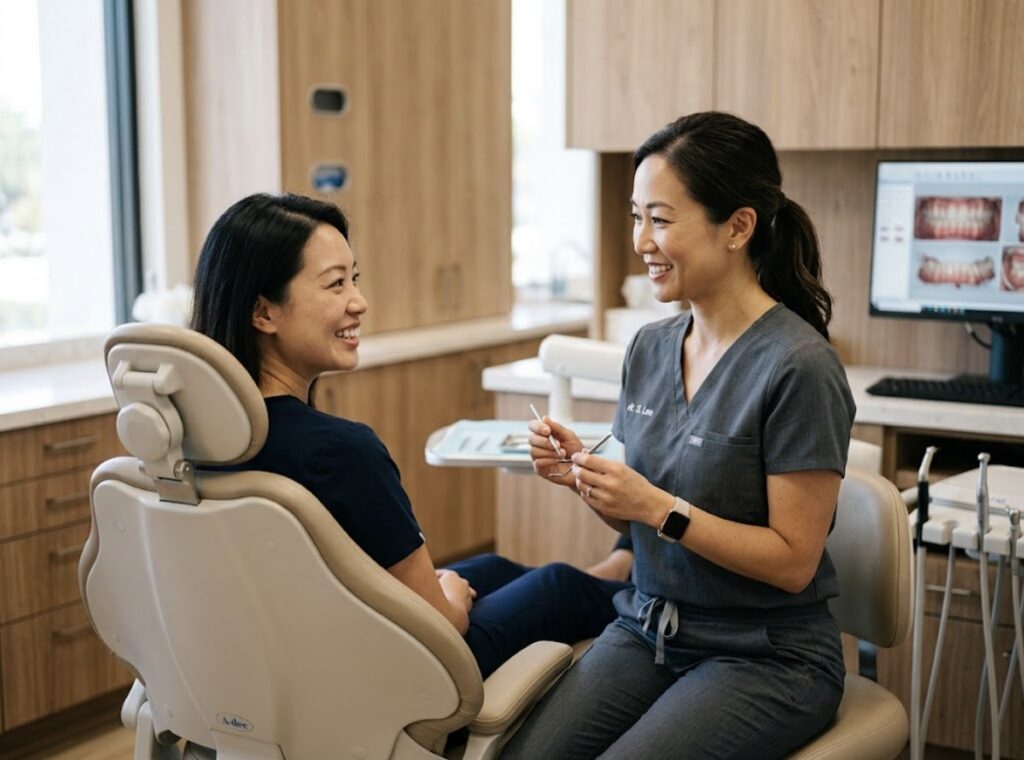
No checklist can replace an orthodontic evaluation, but these five factors can help you understand what Dr. Jen will consider when discussing clear aligner treatment.
1. Your Orthodontic Problem Is Suitable for Aligner Treatment
Clear aligners can be effective for many cases of crowding, spacing, and certain bite concerns.
Research comparing clear aligner treatment with conventional orthodontic methods has found good outcomes in appropriately selected mild to moderate cases. The same research also points out that evidence is less consistent for some complex movements and severe malocclusions.
That is why diagnosis matters. Your orthodontist needs to know exactly which teeth need to move, in what direction, and how much control the appliance must provide.
2. Your Teeth and Gums Are Healthy Enough for Orthodontic Treatment
Orthodontic treatment affects more than the visible part of the tooth. Teeth move through supporting bone while the gums and surrounding tissues respond to those changes.
If you have active decay, gum inflammation, or another oral health problem, you may need to address those concerns before treatment begins.
At Jenuine Smiles Orthodontics, oral health remains part of the treatment conversation because a straighter smile should also support healthy function.
3. You Can Wear Your Aligners Consistently
This is one of the biggest differences between clear aligners and traditional braces.
Metal braces stay attached to the teeth and continue working throughout the day. Clear aligners are removable, so they depend much more heavily on daily wear habits.
Many aligner plans require wear for about 20 to 22 hours per day, although your own instructions may differ. Leaving the trays out for long periods can disrupt how the teeth move through the planned sequence.
If you know you often lose things, forget routines, or prefer not to manage a removable appliance, a fixed brace may be worth discussing.
4. You Can Keep Up With Oral Hygiene and Aligner Care
One benefit of removable aligners is that you can brush and floss without brackets or wires in the way.
That does not remove the need for good oral hygiene. Teeth and trays still need regular cleaning, and you should follow your orthodontist's instructions about eating and drinking while wearing them.
Keeping food and sugary drinks trapped between the teeth and trays for long periods is not a good habit, so daily care matters throughout treatment.
5. You Are Comfortable Following a Structured Treatment Plan
Clear aligner treatment requires active participation.
Depending on your case, you may need to:
- Change trays according to your prescribed schedule
- Attend progress visits
- Wear small tooth colored attachments
- Use elastics if they are part of the plan
- Contact the office if a tray stops fitting correctly
- Wear retainers after active treatment
If you can follow those instructions consistently, removable treatment may fit your routine well.
These factors help explain why some patients do very well with aligners while others may be better served by a fixed appliance.
When Might Traditional Braces Be a Better Fit?
Clear aligners can treat many orthodontic concerns, but traditional braces still offer important advantages in selected cases.
Cases That Need More Complex Tooth Movement
Some rotations, vertical movements, impacted teeth, and more significant bite corrections may require a level of control that fixed braces can provide more predictably.
Brackets and archwires allow the orthodontist to apply continuous forces to individual teeth. For some cases, that makes traditional braces a better treatment tool.
The right choice depends on the mechanics involved, not just how noticeable the appliance looks.
When Removable Treatment Could Be Hard to Manage
A fixed brace may also make more sense if consistent aligner wear will be difficult.
Because braces stay attached, you do not have to remember to put them back in after meals. That can help some younger patients or anyone who knows a removable system would be hard to manage.
Braces do come with their own responsibilities, including careful cleaning and certain food limitations, so neither option is completely hands-off.
The Choice Is Not Simply Clear Aligners vs Metal Braces
Orthodontic care is not about declaring one appliance better than another.
Jenuine Smiles Orthodontics offers Invisalign® clear aligners, traditional metal braces, and clear braces. Dr. Jen can compare options based on your bite, tooth-movement needs, oral health, age, routine, and treatment goals.
That comparison is easier when you lay the differences out side by side.
Clear Aligners vs Traditional Braces
Both options can straighten teeth, but they differ in how they look, feel, and fit into daily life.
| Factor | Clear Aligners | Traditional Braces |
| Appearance | Nearly invisible trays | Brackets and wires remain visible |
| Removability | Removed for meals and oral hygiene | Fixed to the teeth |
| Eating | Trays are removed before meals | Some foods may need to be limited |
| Brushing and flossing | Trays come out for cleaning | Cleaning requires working around brackets and wires |
| Daily responsibility | Requires consistent wear | Appliance remains attached |
| Complex tooth movement | Suitable for many cases | May offer more control for selected complex movements |
| Treatment approach | Uses a planned series of trays | Uses brackets, wires, and orthodontic adjustments |
Clear aligners should not automatically be described as faster, easier, or better. Treatment time and predictability depend on the case, the movements required, and how closely the patient follows instructions.
For many people, the better question is not, "Which option is best?" It is, "Which option gives my orthodontist the right tools for my bite?"
Once you choose a treatment method, your day-to-day habits become an important part of your progress.
What Does Clear Aligner Treatment Require From You?

Clear aligners can fit easily into many routines, but they still require consistency.
Wear Your Aligners as Directed
Your trays need to stay in place over your teeth for most of the day to apply the forces built into the treatment plan.
Removing them for meals and oral hygiene is expected. Leaving them out for long stretches is not.
If your teeth stop tracking as planned, your orthodontist may need to evaluate the fit, wear schedule, or treatment sequence.
Change Aligners on Schedule
Each tray is designed for a specific stage of treatment.
Moving to the next aligner too early does not make teeth move faster. Keeping a tray longer than instructed without checking with your orthodontist may also affect progress.
Follow the schedule Dr. Jen gives you rather than changing trays based on how they feel.
Attend Progress Visits
Digital planning is helpful, but orthodontic treatment still needs clinical supervision.
Progress visits allow Dr. Jen to check:
- How well the aligners fit
- Whether the teeth are tracking as expected
- How the bite is changing
- Whether attachments or elastics are working properly
- Whether additional trays or adjustments are needed
Some patients need extra aligners during treatment. That can be a normal part of how the teeth move, not a sign that something went wrong.
Understanding those expectations also helps set a realistic picture of comfort during treatment.
Are Clear Aligners More Comfortable Than Braces?
Many patients find the smooth surface of clear aligners more comfortable than brackets and wires rubbing against the lips or cheeks.
Still, orthodontic movement involves pressure. A new aligner may feel tight, and teeth can feel tender for a short period as they respond to a new stage of movement.
That is why it's inaccurate to call clear aligner treatment painless.
Some people experience less soft tissue irritation with aligners, while others notice pressure when changing trays. Comfort can vary throughout treatment and from one person to another.
Knowing what the trays feel like is useful, but comfort alone should not determine candidacy. The next step is making sure the treatment can address your bite safely and predictably.
How Does an Orthodontist Determine Whether Clear Aligners Are Right for You?
A quick look in the mirror cannot tell you whether clear aligners are the right fit. Orthodontic diagnosis considers your whole bite, not just your front teeth.
Evaluating Your Teeth and Bite
During a consultation, Dr. Jen may assess:
- Crowding
- Spacing
- Tooth rotations
- Overbite and overjet
- Crossbite
- Open bite
- Jaw relationships
- Gum and dental health
- Missing or impacted teeth
- Previous orthodontic treatment
These details help determine what needs to move and which appliance can control those movements effectively.
Digital Scans and Orthodontic Records
Digital scanning can create a detailed 3D model of the teeth and bite.
Depending on your needs, orthodontic records may also include photos or X-rays. These records help Dr. Jen look beyond cosmetic alignment and evaluate how the upper and lower teeth work together.
Matching Treatment to the Person
Two patients with similar-looking crowding may receive different recommendations.
One may be a strong candidate for Invisalign®. Another may need clear braces, metal braces, or a different treatment approach because of the movements required.
Jenuine Smiles Orthodontics focuses on personalized care, so the appliance is chosen around the patient rather than forcing the patient into one treatment system.
Age also plays a role, but it is not the only factor.
Clear Aligners for Kids, Teens, and Adults

Clear aligners can work at different ages, but readiness and treatment goals vary.
Adults
Adults often like the discreet appearance of clear aligners and the ability to remove them for meals, work events, and oral hygiene.
An orthodontist still needs to consider gum health, existing dental work, bite relationships, and how much movement is required.
Teens
Clear aligners can work well for responsible teens who can follow the wear schedule and care for their trays.
School, sports, meals, hygiene habits, and the likelihood of keeping up with the routine all matter.
Kids and Early Orthodontic Treatment
Some children benefit from orthodontic evaluation before all adult teeth have erupted.
Early treatment may help in selected cases involving jaw growth, bite development, space management, or emerging alignment problems. That does not mean every child needs treatment right away.
The goal of early evaluation is to identify what to treat now, what can wait, and what simply needs monitoring.
The same principle applies at every age. Good orthodontic care starts with the right diagnosis, not with choosing an appliance first.
Frequently Asked Questions About Clear Aligners for Teeth
1. How do I know if I am a good candidate for clear aligners for teeth?
You may be a candidate if you have mild to moderate crowding, spacing, or certain bite concerns and can wear the trays consistently. An orthodontist still needs to evaluate your teeth, roots, bite, oral health, and the type of movement required before recommending treatment.
2. Can clear aligners fix crowded teeth?
Yes, clear aligners can treat many cases of crowded teeth. Aligners commonly treat mild to moderate crowding, while severe crowding or more complex tooth movement may require braces or additional orthodontic techniques.
3. Are clear aligners better than traditional braces?
Not for every patient. Clear aligners are removable and nearly invisible, while traditional braces may offer more control for certain complex movements. The better option depends on your diagnosis, treatment goals, and ability to follow the plan.
4. How many hours a day should I wear clear aligners?
Many clear aligner plans require about 20 to 22 hours of daily wear. Your orthodontist may recommend a different schedule based on your treatment, so follow the instructions given for your specific case.
5. Can adults get clear aligners for teeth?
Yes. Many adults can receive clear aligner treatment if their teeth, gums, bite, and treatment needs make them suitable candidates. Age alone does not determine eligibility.
Are Clear Aligners for Teeth Right for You?
Clear aligners for teeth can offer a discreet, removable way to straighten teeth for many patients, but successful treatment starts with choosing the right case.
Your bite, crowding, spacing, oral health, required tooth movements, and daily habits all matter. Clear aligners may be a strong option for some people, while traditional braces or clear braces may provide better control for others.
At Jenuine Smiles Orthodontics in Torrance, Dr. Jen treats kids, teens, and adults and offers Invisalign® clear aligners, along with metal and clear braces. Her approach keeps oral health, function, comfort, and personal treatment goals in the same conversation.
If you are considering clear aligners and want to know whether they fit your teeth and lifestyle, schedule a consultation with Jenuine Smiles Orthodontics in Torrance. Dr. Jen can evaluate your bite, answer your questions, and help you choose the orthodontic option that makes the most sense for your smile.