
PATIENT CARE GUIDE
Braces Home Care Instructions for Torrance Patients
Congratulations on starting treatment. You are on your way to a fantastic smile, and what you do at home between visits has a real effect on how fast you get there.
Braces are a big investment in your smile, so take great care of them. This page covers everything Dr. Jen tells patients at the bonding appointment: soreness, cleaning, food rules, broken brackets, poking wires, and when to call us.
Save this page to your phone. It answers most questions before you need to pick up the phone.
24 to 48 hrs
TYPICAL SORENESS AFTER AN ADJUSTMENT
2 to 3 min
RECOMMENDED BRUSHING TIME
12 to 24 mos
TYPICAL TREATMENT LENGTH
Will My Braces Hurt?
Most patients notice some tenderness 24 to 48 hours after an appointment. That soreness means your teeth are moving, which is exactly what should be happening.
The feeling usually fades within a few days. Any over-the-counter pain reliever you would take for a headache works well here.
Chewing a small stick of sugar-free gum also helps. It increases blood flow to the area and speeds up healing.
We also send you home with orthodontic wax. Roll a small piece into a ball, dry the bracket with a tissue, and press the wax over any spot that rubs against the inside of your lip or cheek.
What helps during the first week
- Soft foods like pasta, eggs, yogurt, soup, smoothies, and mashed potatoes
- Cold water or ice water to calm sore spots
Keep these nearby
- Orthodontic wax on any bracket that irritates your cheek
- Warm salt water: about half a teaspoon of salt in a cup of warm water
Your lips and cheeks toughen up within a week or two. After that, most patients forget the braces are there.
How Do I Keep My Braces Clean?
Keeping your teeth and gingiva (gums) clean during orthodontic treatment matters more than anything else on this page.
Dental plaque sticks to teeth, especially along the gum line and between teeth. Adding brackets creates many more surfaces for bacteria to hold onto. That is why we ask you to brush regularly and as often as possible after eating.
HOW TO BRUSH WITH BRACES
STEP 01
Start at the gum line
Angle the brush at 45 degrees toward the gums and use small circles. This is the spot patients miss most.
STEP 02
Brush above the brackets
Point the bristles down at an angle to clean the top edge.
STEP 03
Brush below the brackets
Point the bristles up to reach the bottom edge and the wire.
STEP 04
Clean the sides
Work the bristles into the corners around each bracket where food packs in.
STEP 05
Finish with chewing surfaces and tongue
Then rinse and check your work in a mirror.

Give yourself two to three minutes. Rushing is the main reason plaque builds up around brackets.
Brush after every meal when you can. If you are at school or work without a toothbrush, rinse hard with water and brush as soon as you get home.
BEYOND THE TOOTHBRUSH
What Else Can I Use to Keep My Teeth Clean?
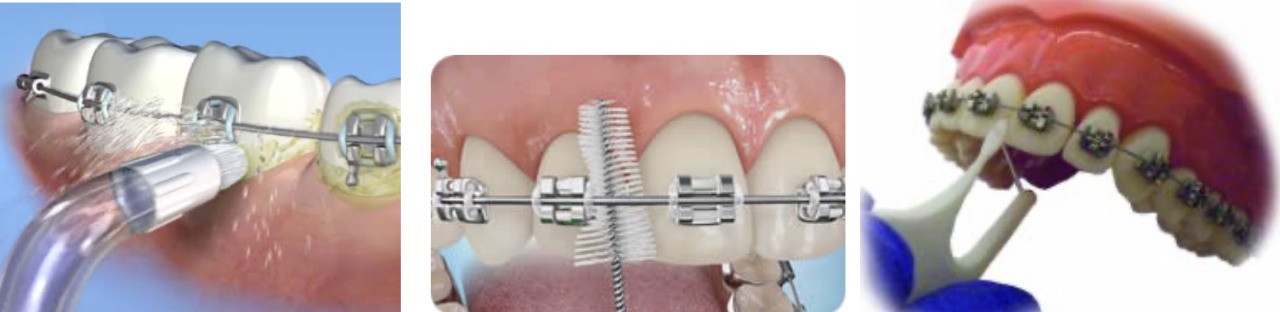
A toothbrush alone will not reach everything once brackets and wires are in place.
Water flosser
Think of it as a small water gun that sprays food off your appliances. Start on a low setting and trace along the gum line and around each bracket.
Proxy brush
This small cone-shaped brush slides behind the wire and clears out what a toothbrush cannot reach. They are easy to carry in a backpack or purse.
Orthodontic flossers
Flossing still matters, and orthodontic flossers let you get under the wire without threading floss by hand every time. Aim for once a day, usually at night.
Fluoride toothpaste and rinse
Fluoride strengthens enamel around brackets, which is your best defense against white spots.
THE REAL PAYOFF
Do Clean Teeth Really Move Faster?
Yes, and here is why.
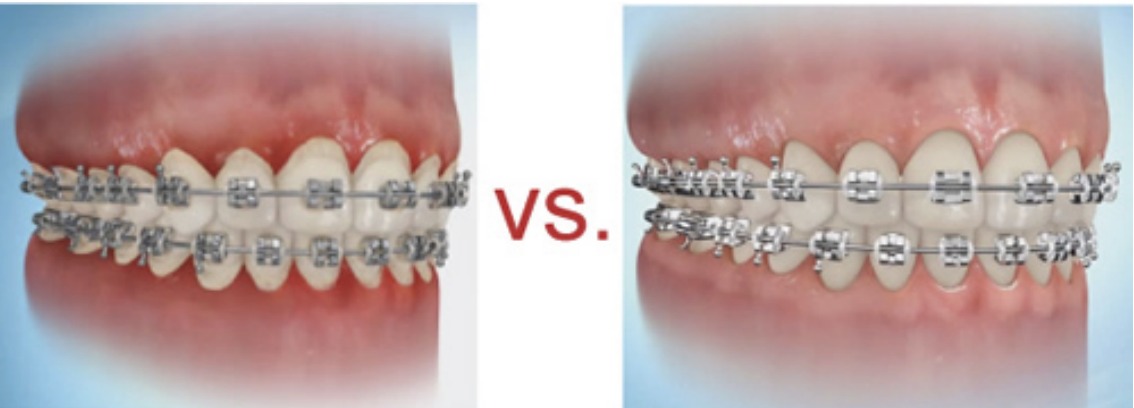
Plaque and bacteria cause gingival inflammation. That inflammation blocks the bone-forming cells your teeth need in order to move.
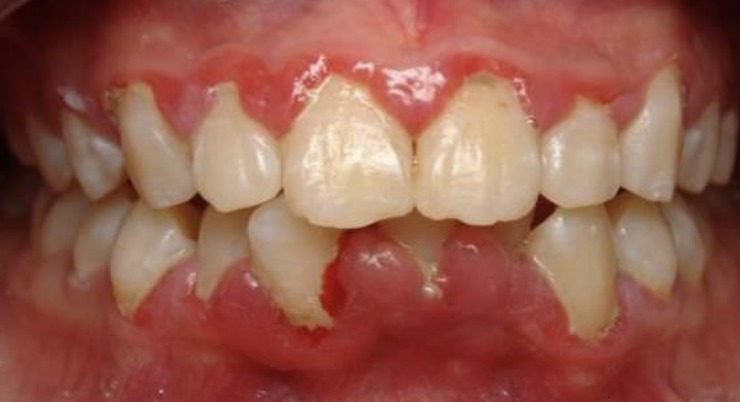
Inflamed gum tissue also gets thicker and larger, so your teeth have more tissue to move through as they straighten.
Left alone, inflammation can lead to recession and other periodontal problems that require costly restorative work later.
Clean teeth move faster, finish sooner, and look better on the day the braces come off.
WORTH PREVENTING
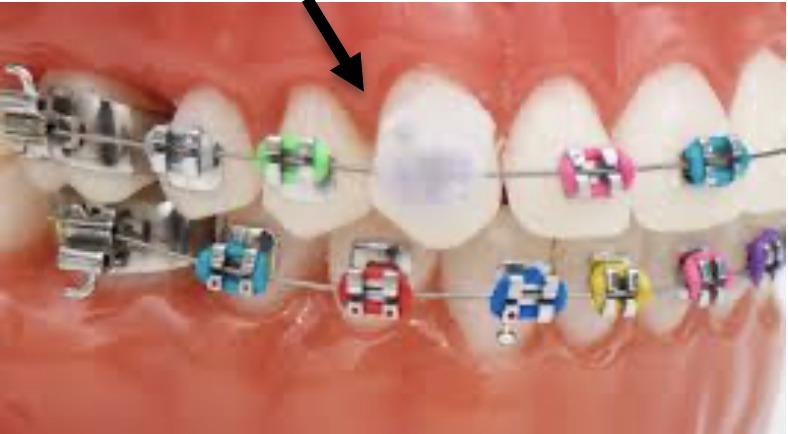
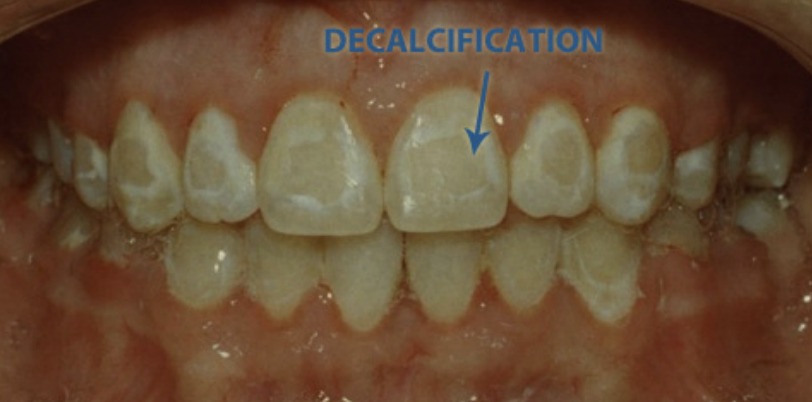
What Are White Spots?
Bacteria in your mouth create acids that break down tooth enamel. Those acids pull minerals out of the enamel and leave demineralized areas, usually right around a bracket where plaque has been sitting.
Once the braces come off, those areas show up as chalky white marks on the tooth.
White spots cannot be removed without restorative dental work. Brushing well, cutting back on sugary drinks, and using fluoride keep them from forming in the first place.
What Foods Do I Have to Avoid With Braces?
Eating with braces is more about how you eat than what you eat. Take smaller bites and chew a bit softer.
Hard foods like apples, carrots, pizza crust, and bagels should be cut or sliced and eaten with your back teeth.
Skip these hard foods
- Hard candy
- Corn chips
- Popcorn, including unpopped kernels
- Beef jerky
- Ice
- Nuts
- Pizza crust
- Corn on the cob
Skip these sticky foods
- Bubble gum and any gum that is not sugar-free
- Taffy
- Caramels
- Toffee
- Starbursts, Sugar Daddies, Tootsie Rolls, and gummy bears
Also avoid chewing on pens, pencils, and fingernails. Those habits break brackets as often as food does.
Go easy on soda, sports drinks, and juice. Sugar plus acid is the combination that causes white spots.
The good news: you can still eat most of the food you love, including soft gummies and sugar-free bubble gum.

STAY CALM
What Happens If I Break Something?
Call our office and keep us posted on how you and your braces are doing. We will tell you whether it can wait until your next scheduled visit or whether you should come in sooner for a repair.
Place any pieces that come off in an envelope and bring them with you.
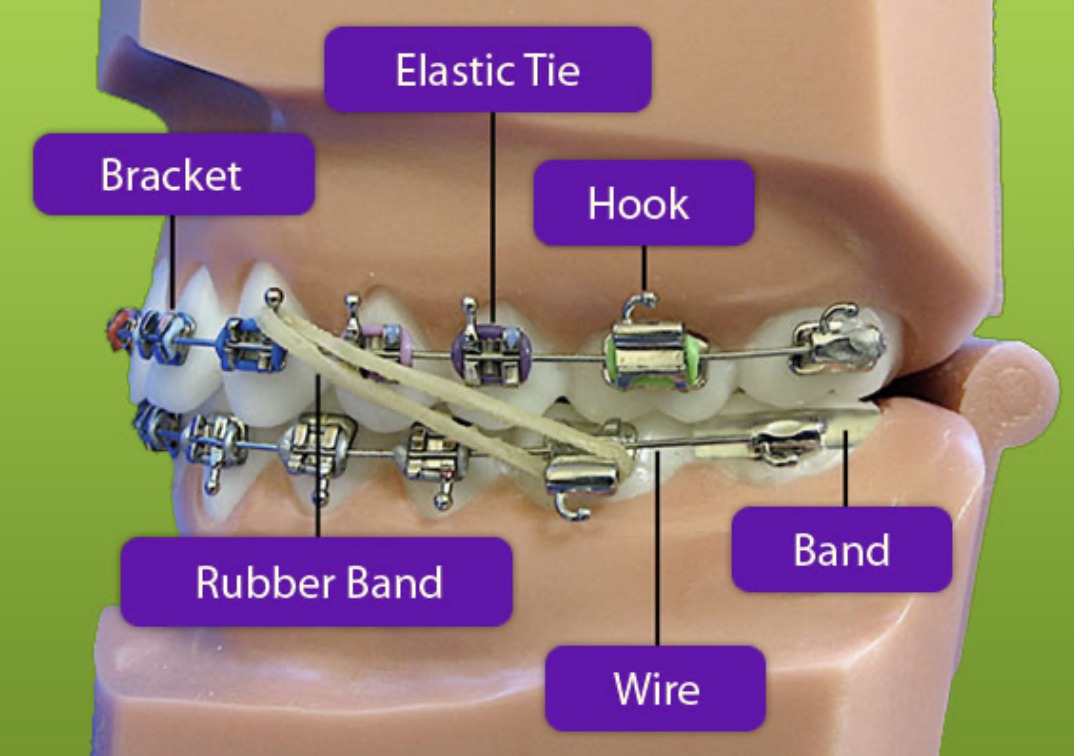
It also helps to know the parts by name when you call: bracket, band, wire (archwire), elastic tie, hook, and rubber band.
| What Happened | What to Do at Home | Call Us? |
|---|---|---|
| Broken or loose bracket | Cover with wax if it is uncomfortable. Save the piece. | Yes, so we can decide on timing |
| Loose band | Save the band if it comes off completely. Avoid chewing on that side. | Yes |
| Poking wire | Wax first. Tuck or trim as described below. | Yes, tell us at your next visit |
| Lost elastic tie | Leave it alone, avoid pulling the wire. | Mention it when you call |
| Lost rubber bands | Keep wearing the ones you have and pick up more. | Yes, we will get more to you |
| General soreness | Pain reliever, salt water rinse, soft foods. | Only if it lasts past a few days |
What Can I Do If My Wire Is Poking Me?
Most poking wires have a quick fix you can do at home. Match your situation to one of these three.
SCENARIO ONE
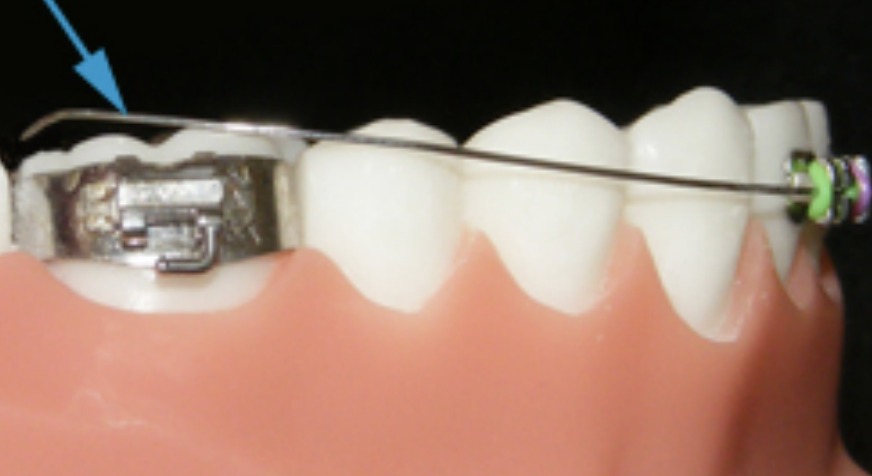
The wire slipped out of place
If the wire has slipped out of the last bracket, guide it back into the tube with a pair of tweezers. If the archwire has slid to one side, use tweezers to walk it back to its original position.
SCENARIO TWO
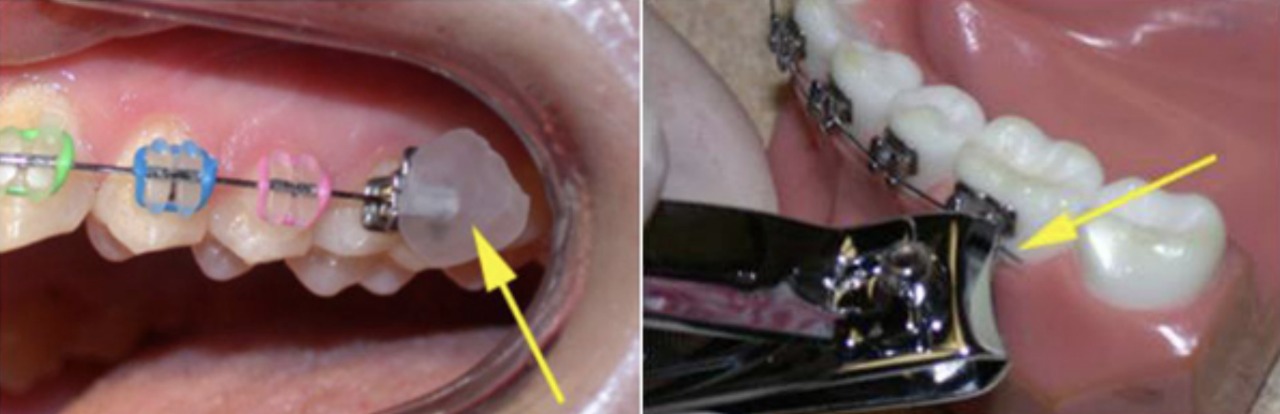
The wire is too long
If the wire is simply too long, try orthodontic wax first. If wax does not solve it, you or a parent can trim the wire at home with clean nail clippers. Cut as far back as you can reach. If you cannot get all the way back, cut between two other brackets and pull the end piece out. We will replace the wire at your next appointment.
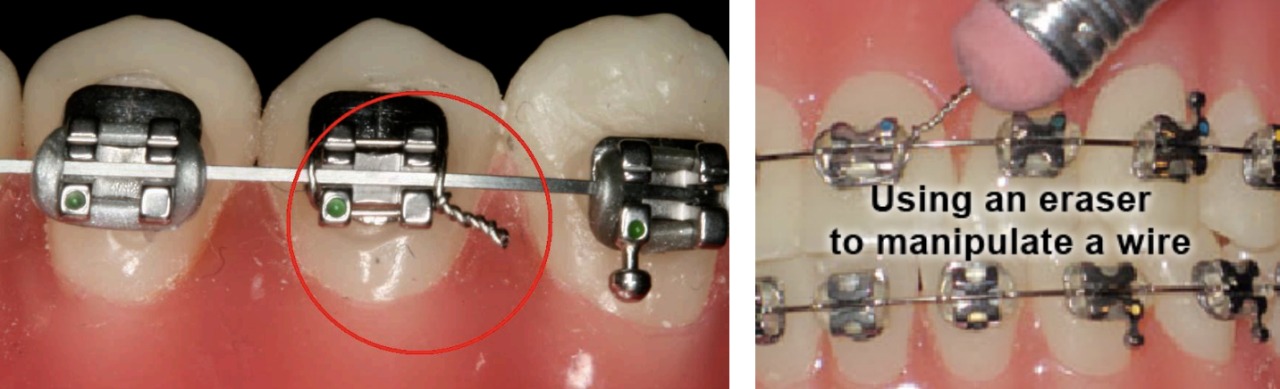
SCENARIO THREE
A smaller wire is poking
If a smaller wire is poking you and it is not the main archwire, push the end toward your teeth with a finger or a pencil eraser. That moves it away from your lip or cheek. Wax works over that spot too.
EXTRA CARE
Mouthguards and Sports
We recommend a mouthguard for any patient playing contact sports. It protects your lips and cheeks from the brackets and protects the braces from impact.
We keep mouthguards in our office for you, so ask at your next visit.
Wearing Your Elastics
If Dr. Jen has you in rubber bands, wear them exactly as instructed, usually full time except when eating and brushing.
Elastics only work with steady pressure. Skipping a day and doubling up the next day does not make up the difference, and it makes teeth sore for no reason.
Change them as directed so they keep their strength. Carry a spare pack in your bag or car.
How Can I Get My Braces Off Sooner?
Four things move your treatment along:
ONE
Keep your appointments and arrive on time
A missed visit often adds weeks to the plan.
TWO
Do not break your appliances
Follow Dr. Jen's food instructions and take care of your braces.
THREE
Wear your elastics and appliances as instructed
This is the single biggest variable patients control.
FOUR
Keep your teeth and braces clean
Healthy gums move teeth faster, and you should still see your general dentist for regular checkups and cleanings.
KEEP IT SIMPLE
Your Daily Braces Routine
Every day
- Brush after breakfast, after lunch or snacks, and before bed
- Floss once with an orthodontic flosser
- Wear elastics as instructed
- Rinse with fluoride rinse before bed
Every week
- Look over your braces in a mirror for loose brackets or bent wires
- Replace a frayed toothbrush head
- Restock wax, elastics, and proxy brushes in your bag
When to Call Jenuine Smiles Orthodontics
Call or text us at (310) 543-2711 if:
- A bracket or band comes loose
- A wire is poking, and wax is not helping
- You run out of elastics
- Soreness lasts more than a few days or gets worse
- Your gums bleed easily or look puffy and red
- You have an injury to your mouth or teeth
We are at 3510 Torrance Blvd, Suite 210, Torrance, CA 90503, and we see patients from Torrance, Redondo Beach, Palos Verdes, Lomita, Gardena, and across the South Bay.
Torrance · Redondo Beach · Palos Verdes · Lomita · Gardena · South Bay
COMMON QUESTIONS
Frequently Asked Questions About Braces Home Care
How long do braces hurt after they are tightened?
Most patients feel tenderness for 24 to 48 hours after an adjustment, and it fades within a few days. Soft foods, cold water, an over-the-counter pain reliever, and sugar-free gum all help. Call us if soreness lasts longer than a week or feels sharp rather than achy.
How often should I brush with braces?
Brush after every meal, so usually three to four times a day, for two to three minutes each time. Focus on the gum line and the top, bottom, and sides of every bracket. If you cannot brush after lunch, rinse well with water and brush as soon as you get home.
Can I use a water flosser instead of flossing?
A water flosser is a great addition, though it does not fully replace floss. Water clears food and loosens plaque, while floss scrapes the contact points between teeth. Use both if you can, or at minimum a water flosser daily plus orthodontic flossers a few times a week.
What do I do if a bracket comes off on a weekend?
Cover the bracket with orthodontic wax if it is rubbing, avoid chewing on that side, and save any pieces in an envelope. Call our Torrance office on the next business day, and we will tell you whether to come in early or wait for your scheduled visit.
Can I chew gum with braces?
Sugar-free gum is fine and can actually help with soreness by increasing blood flow to the area. Avoid bubble gum and any sticky, sugary gum, since it pulls at brackets and feeds the bacteria that cause white spots around them.
Will braces stain my teeth?
Braces themselves do not stain teeth. What causes marks is plaque sitting around brackets long enough to demineralize the enamel, which leaves white spots. Consistent brushing, daily flossing, fluoride toothpaste, and limiting sugary drinks keep the enamel under your brackets healthy.
Do I still need to see my regular dentist during orthodontic treatment?
Yes. Keep your normal six-month cleanings and exams, or come more often if your dentist recommends it. Professional cleanings reach spots that are harder to keep clean with brackets in place, and healthy gums help your teeth move on schedule.
How long does braces treatment take at Jenuine Smiles Orthodontics?
Most cases run 12 to 24 months, though Dr. Jen gives you a personal estimate at your consultation based on your bite and goals. Keeping appointments, wearing elastics as directed, and protecting your appliances are the fastest ways to stay on schedule.
Not in Treatment With Us Yet?
Book a complimentary consultation and meet Dr. Jen. You can also read more about modern braces, Invisalign clear aligners, and retainer options for when treatment wraps up.