
Crowded teeth, a narrow upper jaw, or a bite that does not align properly can leave many parents wondering what steps might help their child’s smile develop in a healthier direction. A palate expander before and after treatment plan may be recommended when a child needs more space for developing teeth or improved alignment between the upper and lower jaws. By gradually widening the upper jaw, palate expansion can create additional room for teeth while helping correct certain bite concerns.
A palate expander, also called a palatal expander, is an orthodontic appliance designed to widen the upper jaw when appropriate. By gradually expanding the palate, an orthodontist may help address concerns such as crossbite, crowding, or limited space for developing teeth.
At Jenuine Smiles Orthodontics in Torrance, Dr. Jen focuses on personalized orthodontic care that considers each patient’s smile, oral health, and long-term goals. Since every child’s development is different, treatment recommendations begin with a thorough evaluation and a plan created around their specific needs.
What to Expect Before, During, and After Palate Expansion
- How a palate expander works and why an orthodontist may recommend one
- What parents may notice before and after palate expander treatment
- How expansion can support concerns like crowding and crossbite
- Why timing and jaw development matter when planning orthodontic treatment
- What to expect during the palate expander process
What Is a Palate Expander and How Does It Work?
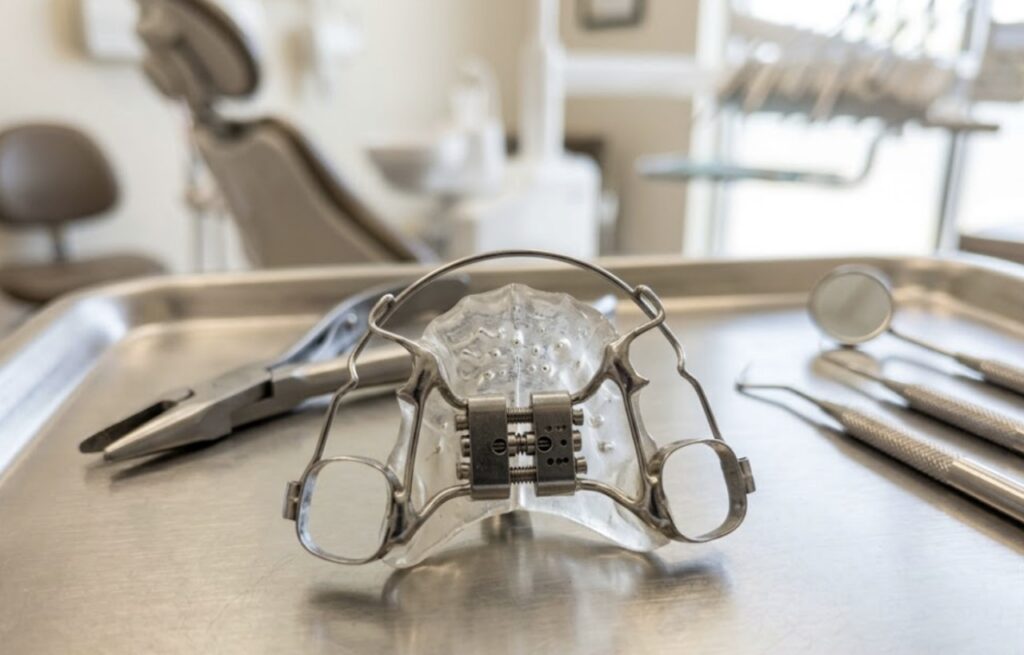
A palate expander is an orthodontic appliance that helps widen the upper jaw when additional width may be needed for proper alignment. The upper jaw plays an important role in how the teeth fit together, and a narrow upper arch can sometimes contribute to bite concerns.
The appliance works by applying controlled pressure to the palate over time. This encourages changes in the upper jaw and surrounding structures while the child is still growing. The amount of expansion and the type of changes that occur depend on several factors, including age, skeletal development, and the patient’s orthodontic needs.
A palate expander is not designed to create the same outcome for every child. Some patients may need expansion to address bite concerns, while others may need it to create space as part of a larger orthodontic treatment plan.
Understanding the Purpose of a Palatal Expander
Parents often first learn about palate expanders when their child’s orthodontist notices concerns during an examination. The recommendation is usually based on how the teeth, jaw, and bite are developing.
A palatal expander may be considered for concerns such as:
- A narrow upper jaw
- Crossbite, where the upper and lower teeth do not align correctly
- Crowding caused by limited space
- Preparing the smile for braces or other orthodontic treatment
Research on maxillary expansion shows that orthodontic expansion can alter upper jaw width, although results depend on individual growth patterns and treatment factors. An orthodontist evaluates each patient carefully to determine the most appropriate approach.
Understanding why an expander may be recommended can help parents make informed decisions about their child’s orthodontic care.
Why Do Orthodontists Recommend Palate Expanders?
A palate expander is recommended when it may help address a specific orthodontic concern. It is not automatically part of every child’s treatment plan.
One common reason for recommending expansion is a crossbite. A crossbite occurs when some upper teeth sit inside the lower teeth when the mouth closes. Correcting this relationship may help improve how the teeth come together and function.
Orthodontists may also recommend expansion when crowding makes it difficult for permanent teeth to develop with enough space. Widening the upper jaw may create additional room and help prepare the smile for future treatment, such as braces or other appliances, when needed.
The decision to use a palate expander depends on a complete orthodontic evaluation. Your orthodontist considers your child’s dental development, bite, jaw structure, and overall treatment goals before making a recommendation.
Before looking at expected changes, it helps to understand what parents may actually notice during the palate expander process before and after.
Palate Expander Before and After: What Changes Can Parents Expect?
Searching for palate expander before and after examples is common for parents who want to understand what treatment may look like. While photos can be helpful, every child begins treatment with different orthodontic needs.
Before treatment, some children may have:
- A narrow upper arch
- Teeth that appear crowded
- Limited spacing for permanent teeth
- Bite concerns, such as a crossbite
After expansion, changes may include improvements in upper arch width and spacing when expansion is appropriate. Some children may also have improved bite relationships as part of their overall orthodontic treatment.
| Before Palate Expander Treatment | Possible Changes After Treatment |
| Narrow upper jaw | Increased upper arch width when appropriate |
| Limited space for developing teeth | More room within the dental arch |
| Crossbite concerns | Improved bite relationship in certain cases |
| Crowding concerns | Better spacing as part of a complete orthodontic plan |
It is important to remember that a palate expander does not straighten every tooth by itself. Some patients may still need braces, clear aligners, or additional orthodontic treatment to complete their smile plan.
The next step is understanding why timing plays such an important role in how expansion works.
Dental Expansion vs. Skeletal Expansion: Why Timing Matters
The timing of palate expander treatment can influence how the upper jaw responds. Children and teens are often evaluated during periods of growth because their jaw structures are still developing.
There are differences between dental expansion and skeletal expansion. Dental expansion mainly involves the movement of the teeth and surrounding structures. Skeletal expansion primarily involves changes to the upper jaw itself.
An orthodontist considers factors such as:
- Age
- Growth stage
- Jaw development
- Bite concerns
- Overall orthodontic goals
Research has explored how age and skeletal maturity can affect expansion outcomes. These factors help orthodontists determine when treatment may be most appropriate for each patient.
A personalized evaluation helps families understand whether expansion is appropriate for their child’s orthodontic needs and where it may fit within their treatment plan.
What Is the Palate Expander Treatment Process Like?

Starting orthodontic treatment can feel like a big step for families. Knowing what to expect can make the process easier and more comfortable.
The Initial Orthodontic Consultation
The process begins with an orthodontic evaluation. During this visit, the orthodontist reviews:
- Tooth development
- Bite alignment
- Upper and lower jaw relationship
- Growth patterns
- Oral health concerns
This information helps create a treatment plan based on your child’s specific needs.
Choosing the Right Orthodontic Appliance
There are different types of palate expanders, and the recommended appliance depends on the treatment goals.
Some expanders are fixed and remain attached during treatment. Others may be removable and worn as directed by the orthodontist.
The orthodontist will explain how the appliance works, how long it may be needed, and what your child should expect throughout treatment.
Monitoring Progress During Treatment
Regular orthodontic appointments allow the team to monitor progress and make adjustments when needed.
Parents can support treatment by helping their child:
- Follow appliance instructions
- Maintain good oral hygiene
- Attend scheduled appointments
- Communicate any concerns with the orthodontic team
Proper care helps support a positive orthodontic experience throughout treatment.
Fixed vs. Removable Palate Expanders: Understanding the Options
The type of expander recommended depends on your child’s orthodontic needs, age, and treatment goals. Your orthodontist will explain which option may best support the planned results.
| Type of Expander | Description |
| Fixed expander | Attached to the teeth and adjusted by the orthodontic team during treatment |
| Removable expander | Can be taken out and worn according to specific instructions |
Fixed appliances are often used when consistent expansion is needed. Removable appliances may be considered in certain cases where patient cooperation and wear instructions are important parts of treatment.
An orthodontic evaluation helps determine which appliance is best for your child’s situation.
Caring for a Palate Expander During Treatment
Taking care of the appliance and maintaining good oral hygiene are important parts of the treatment process.
Helpful habits include:
- Brushing carefully around the appliance and teeth
- Following the cleaning instructions from your orthodontist
- Keeping regular appointments
- Following the adjustment instructions closely
- Contacting the orthodontic office with questions or concerns
Some children notice pressure or temporary changes after adjustments. Your orthodontic team can explain what is expected and provide guidance throughout treatment.
Understanding how to care for an appliance can help children feel more confident during their orthodontic journey.
How Jenuine Smiles Orthodontics Supports Torrance Families

Choosing an orthodontist is an important decision for your family. Parents want clear answers, personalized recommendations, and a team that understands each child’s unique needs.
At Jenuine Smiles Orthodontics, Dr. Jen and the team focus on providing gentle, individualized orthodontic care for kids, teens, and adults. The practice offers treatments including Invisalign® clear aligners, metal braces, clear braces, TMJ treatment, and other orthodontic solutions.
The goal is to help patients understand their options while keeping their overall oral health in mind. A consultation gives families the opportunity to discuss concerns, ask questions, and learn whether a palate expander or another orthodontic approach may be appropriate.
Frequently Asked Questions About Palate Expander Before and After Treatment
1. What does a before-and-after comparison of a palate expander show?
A palate expander before-and-after comparison may show a wider upper dental arch, more room for crowded or developing teeth, and improvement in certain crossbites. Some children may also develop temporary spacing between the upper front teeth during expansion. The exact changes depend on age, jaw development, appliance type, and treatment goals.
2. How long does a child usually wear a palate expander?
Palate expander treatment length varies because active expansion and the time needed to stabilize the new width are separate stages. Your child’s orthodontist will determine both phases based on the amount of expansion needed, growth, bite correction, and response to treatment.
3. Does a palate expander hurt?
A palate expander may cause temporary pressure, tightness, or mild soreness, particularly after an adjustment, but the experience varies by child and appliance. Your orthodontic team can explain what sensations are expected and when discomfort should be evaluated.
4. Does every child need a palate expander before braces?
No. A palate expander is generally considered when a child has concerns such as a narrow upper jaw, crossbite, or insufficient space for developing teeth. Some children can move directly into braces or another orthodontic treatment without expansion.
5. At what age is a palate expander best?
There is no single best age for every child. Palate expansion is often evaluated while the upper jaw is still developing, so an orthodontist considers skeletal maturity, tooth eruption, bite relationships, and the specific problem being treated rather than age alone.
6. Will a palate expander cause a gap between the front teeth?
A temporary gap between the upper front teeth can occur during some types of palate expansion because the upper arch is widening. Not every child develops a noticeable gap, and what happens afterward depends on the child's teeth and overall orthodontic treatment plan.
7. How is a palate expander adjusted?
How a palate expander is adjusted depends on the appliance. Some traditional expanders use scheduled activations according to detailed instructions, while other systems use a different sequence or are managed by the orthodontic team. Families should follow only their orthodontist’s specific activation schedule.
8. What happens after the palate is expanded?
After the planned expansion is reached, the orthodontist may keep the appliance in place for a period so the new width can stabilize. The child may then continue with monitoring, braces, aligners, or another phase of orthodontic treatment depending on the original bite and alignment concerns.
Schedule a Palate Expander Evaluation in Torrance
A palate expander may be an important part of orthodontic treatment for children who need help with upper jaw width, spacing, or bite concerns. Since every smile develops differently, an evaluation is the best way to understand your child’s options.
If you are considering orthodontic care for your child in Torrance, Jenuine Smiles Orthodontics is here to help your family understand the next steps. Schedule a free consultation with Dr. Jen and the team to discuss your child’s smile development and create a personalized orthodontic plan.